
Showing posts with label CBC News. Show all posts
Showing posts with label CBC News. Show all posts
VIDEO [CC] - Deaf News: Uber's in-app features create job opportunities for Deaf drivers in Canada and the United States.

CBC TORONTO -- As many as 300 drivers in Toronto, use Uber's in-app features, for Deaf and Hard of Hearing, people. For many Uber users, much of the appeal of the ride-hailing service is that most of the transaction can be done through an app, related the story covers New App Features For Deaf Uber Drivers.
 But for one Toronto Uber driver, it's about much more than convenience. Shafiul Hoque is a Deaf driver who says thanks to the company's technology-driven approach, he has his first job in more than a decade.
"I heard that they were willing to hire Deaf drivers," Hoque said in an interview aided by an American Sign Language interpreter. "I found that they were actually very accessible."
Hoque says he still remembers his first pick-up. It went smoothly and "communication was not a problem at all."
He credits a set of in-app features that Uber has rolled out specifically for Deaf and HoH drivers to communicate with riders.
Uber says he's now one of at least 300 drivers in Toronto alone who have been using the in-app features on the job for the past year.
How it works - As soon as a trip is requested, drivers using the in-app features will see a flashing light, in addition to getting the usual audio alert. Passengers also receive a notification, to let them know their Uber driver will be Deaf or HoH.
“If I can do it, so can you.” Larry is Deaf and on a mission to follow his dreams. Find out how partnering with Uber made it possible for him to move to LA and support his family while starting a new career.
Passengers also aren't able to call their driver - they can only text and they'll get an additional prompt to make sure they put in their destination.
"Some people have always asked me how I can communicate with people so easily, but with the technology and with the cellular device, I can do that," Hoque said. "That eliminates barriers for all of us."
For Hoque, the simple additions to the Uber app have opened up a world of opportunity. Not long ago, he didn't think he would ever be able to get a job as a driver.
Life-changing technology - With technological advances, that no longer seems to be a problem. Hoque says he knows as many as 10 other people from the Deaf and Hard of Hearing community who are out on the roads driving for Uber... Read More on CBC News.
Related Uber:
New York City’s First Deaf Taxi Drivers
New App Features For Deaf Uber Drivers
Uber's In-App Features Aims More Deaf Drivers
Deaf Woman Killed After Driver Suspected Of DUI
CBC TORONTO -- As many as 300 drivers in Toronto, use Uber's in-app features, for Deaf and Hard of Hearing, people. For many Uber users, much of the appeal of the ride-hailing service is that most of the transaction can be done through an app, related the story covers New App Features For Deaf Uber Drivers.
But for one Toronto Uber driver, it's about much more than convenience. Shafiul Hoque is a Deaf driver who says thanks to the company's technology-driven approach, he has his first job in more than a decade."I heard that they were willing to hire Deaf drivers," Hoque said in an interview aided by an American Sign Language interpreter. "I found that they were actually very accessible."
Hoque says he still remembers his first pick-up. It went smoothly and "communication was not a problem at all."
He credits a set of in-app features that Uber has rolled out specifically for Deaf and HoH drivers to communicate with riders.
Uber says he's now one of at least 300 drivers in Toronto alone who have been using the in-app features on the job for the past year.
How it works - As soon as a trip is requested, drivers using the in-app features will see a flashing light, in addition to getting the usual audio alert. Passengers also receive a notification, to let them know their Uber driver will be Deaf or HoH.
“If I can do it, so can you.” Larry is Deaf and on a mission to follow his dreams. Find out how partnering with Uber made it possible for him to move to LA and support his family while starting a new career.
Passengers also aren't able to call their driver - they can only text and they'll get an additional prompt to make sure they put in their destination.
"Some people have always asked me how I can communicate with people so easily, but with the technology and with the cellular device, I can do that," Hoque said. "That eliminates barriers for all of us."
For Hoque, the simple additions to the Uber app have opened up a world of opportunity. Not long ago, he didn't think he would ever be able to get a job as a driver.
Life-changing technology - With technological advances, that no longer seems to be a problem. Hoque says he knows as many as 10 other people from the Deaf and Hard of Hearing community who are out on the roads driving for Uber... Read More on CBC News.
Related Uber:
New York City’s First Deaf Taxi Drivers
New App Features For Deaf Uber Drivers
Uber's In-App Features Aims More Deaf Drivers
Deaf Woman Killed After Driver Suspected Of DUI
Deaf News: Deaf teen leaves rural community for fresh start in Regina school due to sign language boost socialization in the capital of Saskatchewan.
 CBC REGINA, SK -- For those in remote and rural Sask., a hearing impairment can present major challenges. Seventeen-year-old Shayla Tanner, who is Deaf, has faced challenges academically and socially in her home community but has seen tremendous growth in the past three years.
She recalls that with few in her community of Cowessess First Nation knowing sign language, she fell behind in school and socializing. 'I just felt horrible'
"With my work I really felt like I just wanted to give up with it," she said through her interpreter as she signed. "I couldn't communicate with my friends and I felt like I was just having a breakdown.
"With reading, when I used my voice while at my old school there were four kids and they said they couldn't understand me, and I just felt horrible about that."
Tanner says she would try to read lips and write notes to speak to others in her community.
"They would talk slow to me, but I still didn't understand. They would talk and I just didn't really get it."
Making friends was more difficult than it is now.
New beginning at Regina high school. It was her special education teacher who suggested she go to school at Thom Collegiate in Regina, Saskatchewan.
Thom teacher Joanne Weber, who is Deaf herself, runs a class that has been highly praised for the way it focuses on visual learning and sign language.
Art could be the next big breakthrough in Deaf education.
And so, three years ago, Tanner left Cowessess and moved in with her brother in Regina so that she could join the program.
It's was a challenge, she says. She learned a more in-depth version of American Sign Language and gained a better grasp of English grammar... Read More.
CBC REGINA, SK -- For those in remote and rural Sask., a hearing impairment can present major challenges. Seventeen-year-old Shayla Tanner, who is Deaf, has faced challenges academically and socially in her home community but has seen tremendous growth in the past three years.She recalls that with few in her community of Cowessess First Nation knowing sign language, she fell behind in school and socializing. 'I just felt horrible'
"With my work I really felt like I just wanted to give up with it," she said through her interpreter as she signed. "I couldn't communicate with my friends and I felt like I was just having a breakdown.
"With reading, when I used my voice while at my old school there were four kids and they said they couldn't understand me, and I just felt horrible about that."
Tanner says she would try to read lips and write notes to speak to others in her community.
"They would talk slow to me, but I still didn't understand. They would talk and I just didn't really get it."
Making friends was more difficult than it is now.
New beginning at Regina high school. It was her special education teacher who suggested she go to school at Thom Collegiate in Regina, Saskatchewan.
Thom teacher Joanne Weber, who is Deaf herself, runs a class that has been highly praised for the way it focuses on visual learning and sign language.
Art could be the next big breakthrough in Deaf education.
And so, three years ago, Tanner left Cowessess and moved in with her brother in Regina so that she could join the program.
It's was a challenge, she says. She learned a more in-depth version of American Sign Language and gained a better grasp of English grammar... Read More.
VIDEO [CC] - Deaf News: Deaf drivers faced with disbelief, disrespect during Winnipeg traffic stops due to communication barriers in Canada.
 CBC WINNIPEG -- Two young Winnipeggers are urging Winnipeg Police Service to be more professional when dealing with people who are Deaf after both experienced officers who didn't believe them and refused to try to communicate with them at traffic stops.
Dana Zimmer and Jenna Irwin both experienced incredulous officers who didn't initially believe they were Deaf during traffic stops.
"It's happened a few times. I'm not a bad driver but it has happened a few times, and sometimes my interactions with police are very cordial – very simple, I'll get a ticket and that's it, but every once in a while it's just a little bit different," said Zimmer.
Zimmer remembers a time a few years ago when she was pulled over, and the officer started talking to her after she rolled down her window.
"Of course they'll be talking, that's natural, that's what they would normally do, and I gestured that I'm a Deaf individual and I use sign language," she said. "They just kind of gave me this look like they didn't believe me. They didn't actually think I was a Deaf person so they just kept talking to me as if I could understand them."
Zimmer said she tried again to communicate that she was Deaf, but the officer seemed frustrated.
"I felt that I needed to prove myself as a Deaf individual, and I didn't know how I was going to do that other than saying that I was Deaf. I felt that they just didn't believe me," she said.
Zimmer said the officer motioned for her to get a pen and paper, which she didn't have handy, so he went to his car and came back with a ticket.
She said the ticket had to do with a new rule she wasn't aware of.
"When someone says they're Deaf, they need to be able to interact with them in an appropriate way," said Zimmer. "You're going to be interacting with different people in the community, and it needs to always be professional."
 Irwin has experienced the same thing. She says it usually takes several gestures and requests to have officers believe she is Deaf. "I think the first and second time they try to talk, and they think I'm lying, and then I'm like, 'No, I can't understand you,'" she said.
She recently had an experience on her way home from work where she tried to use a pen and paper to communicate with an officer, but he refused. He went back to his cruiser car and she waited 45 minutes for another officer to show up who knew some sign language.
She says the officer could've communicated to her he was calling someone who knew sign, but he refused to use a pen and paper to communicate.
"I think sometimes the police officers just don't want to take the time or make the effort to communicate with us," she said. I think we all want to be treated equally. We want to feel as though we're the same as everybody else, and communication is very important. Eye contact is very important. I'm not too sure why they would assume we should be treated any differently just because we're Deaf."
Read The Full Story.
Related Deaf Winnipeggers:
Deaf-Blind Housing Project In Winnipeg, Canada
Study on Sarcasm and American Sign Language
Deaf Canadian's Gallaudet Dream
Manitoba Deaf Athletes To Get More Sign Language Help
Manitoba Swimmer At Deaflympics
Deaf Homeless Man In Compassionate Gesture
Deaf Canadian Curling Champion Dies
Winnipeg Most Racist City In Canada: Maclean's
CBC WINNIPEG -- Two young Winnipeggers are urging Winnipeg Police Service to be more professional when dealing with people who are Deaf after both experienced officers who didn't believe them and refused to try to communicate with them at traffic stops.Dana Zimmer and Jenna Irwin both experienced incredulous officers who didn't initially believe they were Deaf during traffic stops.
To activate this feature, press the "CC" button.
"It's happened a few times. I'm not a bad driver but it has happened a few times, and sometimes my interactions with police are very cordial – very simple, I'll get a ticket and that's it, but every once in a while it's just a little bit different," said Zimmer.
Zimmer remembers a time a few years ago when she was pulled over, and the officer started talking to her after she rolled down her window.
"Of course they'll be talking, that's natural, that's what they would normally do, and I gestured that I'm a Deaf individual and I use sign language," she said. "They just kind of gave me this look like they didn't believe me. They didn't actually think I was a Deaf person so they just kept talking to me as if I could understand them."
Zimmer said she tried again to communicate that she was Deaf, but the officer seemed frustrated.
"I felt that I needed to prove myself as a Deaf individual, and I didn't know how I was going to do that other than saying that I was Deaf. I felt that they just didn't believe me," she said.
Zimmer said the officer motioned for her to get a pen and paper, which she didn't have handy, so he went to his car and came back with a ticket.
She said the ticket had to do with a new rule she wasn't aware of.
"When someone says they're Deaf, they need to be able to interact with them in an appropriate way," said Zimmer. "You're going to be interacting with different people in the community, and it needs to always be professional."
Irwin has experienced the same thing. She says it usually takes several gestures and requests to have officers believe she is Deaf. "I think the first and second time they try to talk, and they think I'm lying, and then I'm like, 'No, I can't understand you,'" she said.She recently had an experience on her way home from work where she tried to use a pen and paper to communicate with an officer, but he refused. He went back to his cruiser car and she waited 45 minutes for another officer to show up who knew some sign language.
She says the officer could've communicated to her he was calling someone who knew sign, but he refused to use a pen and paper to communicate.
"I think sometimes the police officers just don't want to take the time or make the effort to communicate with us," she said. I think we all want to be treated equally. We want to feel as though we're the same as everybody else, and communication is very important. Eye contact is very important. I'm not too sure why they would assume we should be treated any differently just because we're Deaf."
Read The Full Story.
Related Deaf Winnipeggers:
Deaf-Blind Housing Project In Winnipeg, Canada
Study on Sarcasm and American Sign Language
Deaf Canadian's Gallaudet Dream
Manitoba Deaf Athletes To Get More Sign Language Help
Manitoba Swimmer At Deaflympics
Deaf Homeless Man In Compassionate Gesture
Deaf Canadian Curling Champion Dies
Winnipeg Most Racist City In Canada: Maclean's
VIDEO [CC] - Deaf News: Deaf-Blind housing project will be first of its kind in Manitoba, Canada.
 CBC WINNIPEG -- 10 suites at Gas Station Arts Centre redevelopment will be designed for Deaf-Blind people. Winnipeg will soon be one of the first cities in Canada to have specialized housing designed for people who are both Deaf and Blind.
Bonnie Heath, executive director of the Resource Centre for Manitobans who are Deaf-Blind, has put down payments on 10 suites in the residential portion of the new Gas Station Arts Centre, which is slated for the corner of River Avenue and Osborne Street.
"We're very excited," Heath said, adding that the need for this kind of housing is great.
"The Deaf-Blind individuals that I'm in contact with in their own homes right now feel isolated and unsafe."
She added, "You have a combination of you can't see and you can't hear; you don't know who's coming into your place. You don't know, for example, one of my Deaf-Blind friends said she wouldn't even know the toilet was running over until the water was at her ankles in the dining room."
Heath works with dozens of Manitobans who are Deaf-Blind - people with a combination of no vision or low vision and hearing that rely on interpreters to communicate.
The apartments will not only bring members of the Deaf-Blind community under one roof, the apartments will be designed with them and for them for safer and easier living, said Heath.
"Sharp edges, you know, things that we take for granted when we can see, getting around corners - those types of things will be avoided."
Winnipeg-based architect Steve Cohlmeyer, whose resume includes The Forks, will tackle the project, which he acknowledges will be a first for him.
"At the level of problem-solving, I think it's really exciting - and exciting because there's a whole service aspect and a kind of integration of a whole group I was unaware of when I first got the call," he said.
Some of the features Cohlmeyer is considering is a tactile approach to design - for example, surfaces that will distinguish between rooms.
"For people who have no sight and zero hearing, we'll certainly want to explore the kinds of things you can help feel your way through a space," he said, adding that for people with partial sight, high-contrast spaces may be important.
"Exaggerated colour difference or dark and light contrast will be a helpful thing to have," he said. "So you can see where a door cabinet is against a light floor as opposed to all-white cabinets and all-white floors."
In the coming months, Cohlmeyer will visit Deaf-Blind clients to "watch how they live" to source his design solutions. He said he is also travelling to Toronto and the United States to visit existing Deaf-Blind housing to learn what works well and what doesn't.
"Even when you're well-acquainted with an environment you can still bump into things, so we want to be watching and learning as much as we can about how we facilitate movement and operation of equipment within the unit itself and how they can move again between the unit and even elevators and an outdoor terrace." Source
Related Deaf Winnipeggers:
Deaf 'Peg Faced 'Disrespect' During Traffic Stops
Study on Sarcasm and American Sign Language
Deaf Canadian's Gallaudet Dream
Manitoba Deaf Athletes To Get More Sign Language Help
Manitoba Swimmer At Deaflympics
Deaf Homeless Man In Compassionate Gesture
Deaf Canadian Curling Champion Dies
Winnipeg Most Racist City In Canada: Maclean's
CBC WINNIPEG -- 10 suites at Gas Station Arts Centre redevelopment will be designed for Deaf-Blind people. Winnipeg will soon be one of the first cities in Canada to have specialized housing designed for people who are both Deaf and Blind.Bonnie Heath, executive director of the Resource Centre for Manitobans who are Deaf-Blind, has put down payments on 10 suites in the residential portion of the new Gas Station Arts Centre, which is slated for the corner of River Avenue and Osborne Street.
"We're very excited," Heath said, adding that the need for this kind of housing is great.
"The Deaf-Blind individuals that I'm in contact with in their own homes right now feel isolated and unsafe."
She added, "You have a combination of you can't see and you can't hear; you don't know who's coming into your place. You don't know, for example, one of my Deaf-Blind friends said she wouldn't even know the toilet was running over until the water was at her ankles in the dining room."
Heath works with dozens of Manitobans who are Deaf-Blind - people with a combination of no vision or low vision and hearing that rely on interpreters to communicate.
The apartments will not only bring members of the Deaf-Blind community under one roof, the apartments will be designed with them and for them for safer and easier living, said Heath.
"Sharp edges, you know, things that we take for granted when we can see, getting around corners - those types of things will be avoided."
Winnipeg-based architect Steve Cohlmeyer, whose resume includes The Forks, will tackle the project, which he acknowledges will be a first for him.
"At the level of problem-solving, I think it's really exciting - and exciting because there's a whole service aspect and a kind of integration of a whole group I was unaware of when I first got the call," he said.
Some of the features Cohlmeyer is considering is a tactile approach to design - for example, surfaces that will distinguish between rooms.
"For people who have no sight and zero hearing, we'll certainly want to explore the kinds of things you can help feel your way through a space," he said, adding that for people with partial sight, high-contrast spaces may be important.
"Exaggerated colour difference or dark and light contrast will be a helpful thing to have," he said. "So you can see where a door cabinet is against a light floor as opposed to all-white cabinets and all-white floors."
In the coming months, Cohlmeyer will visit Deaf-Blind clients to "watch how they live" to source his design solutions. He said he is also travelling to Toronto and the United States to visit existing Deaf-Blind housing to learn what works well and what doesn't.
"Even when you're well-acquainted with an environment you can still bump into things, so we want to be watching and learning as much as we can about how we facilitate movement and operation of equipment within the unit itself and how they can move again between the unit and even elevators and an outdoor terrace." Source
Related Deaf Winnipeggers:
Deaf 'Peg Faced 'Disrespect' During Traffic Stops
Study on Sarcasm and American Sign Language
Deaf Canadian's Gallaudet Dream
Manitoba Deaf Athletes To Get More Sign Language Help
Manitoba Swimmer At Deaflympics
Deaf Homeless Man In Compassionate Gesture
Deaf Canadian Curling Champion Dies
Winnipeg Most Racist City In Canada: Maclean's
Deaf News: Canadian schools for the Deaf facing lawsuit alleging abuse.

CBC HALIFAX -- A Halifax law firm says it has filed a statement of claim in Nova Scotia Supreme Court alleging systemic sexual, physical, and mental abuse against Deaf children who attended two segregated residential schools in the province.
Lawyer Ray Wagner says Wednesday's move is an important step in a proposed class action lawsuit that still needs to be certified by a judge before proceeding to trial.
The schools named in the claim are the School for the Deaf in Halifax and the Interprovincial School for the Education of the Deaf in Amherst.
The Nova Scotia government has also been named as a defendant in allegations that have not been proven in court.
The claim alleges the province, which was responsible for the operation and oversight of the institutions, chose not to properly investigate or stop the abuse and mistreatment of the children, and that its actions constitute negligence and breach of fiduciary duty.
The law firm says that to date it has been contacted by over 150 former students of the two schools. Source
Another class action was proposed in 2010 by Merchant Law group of Saskatchewan. Two other men were named as lead plaintiffs in that action. But there's no indication it has proceeded beyond the initial filing.
60 people signed up.
There have also been criminal allegations against staff at the schools over the years.
Wagner said a lot of people have already expressed interest in joining this proposed class action.
"We held a town hall meeting at the Halifax library where there were approximately 80 people had attended to listen to what we were saying and proposing with a class action," Wagner told CBC News.
"And already at this early stage we have 60 people that have signed up."
Wagner's firm also a multi-million dollar settlement in the Home for Coloured Children case.
"We're hearing the same stories, the same narrative," Wagner said. "It is a very common experience, both by people in the school for the Deaf and the Nova Scotia Home for Coloured children."
Wagner said people wanting to join the lawsuit over the schools for the Deaf will have to be patient. He said the suit must wait two months before the next step is taken, and he predicts any litigation is still many months away. Source
Class action lawsuit alleges abuse at Ontario schools for the Deaf.
 Four provincial schools for the Deaf named in $325-million lawsuit.
TORONTO -- A Toronto man alleges he was abused for years at Ontario schools for the Deaf and has launched a class action lawsuit on behalf of other former students against the provincial government.
The statement of claim, filed Monday in Ontario Superior Court of Justice, alleges sexual, physical and mental abuse at four provincially run schools for the Deaf over the course of decades.
None of the allegations have been proven in court.
Christopher Welsh, in his statment of claim, accuses the province of negligence in the establishment, funding, operation, management and supervision of schools in Ottawa, London, Belleville and Milton.
"Students have suffered sexual, physical and emotional abuse at the hands of teachers, residence counsellors, other students and employees of the schools," reads the statement of claim.
A spokesman for the province's Ministry of Education would not comment on the case as it is before the courts, but said the current government believes every child deserves high-quality education and a supportive learning environment.
"Over the years, we have been committed to ensuring students in our schools have access to the supports and resources they need to succeed," said Gary Wheeler. "This includes our most vulnerable students."
Welsh went to two of the schools named in the class-action suit -- Ernest C. Drury School for the Deaf in Milton, Ont., where he lived from the time he was five years old in 1964, followed by Robarts School for the Deaf in London, Ont., according to the claim.
He said he was forced to wear hearing aids and was repeatedly struck across his ears, leaving him bloodied and in pain.
'Form of punishment'
Welsh's claim also alleges he was hit with rolled up magazines across his hands and beaten with a stick and belt by teachers as "a form of punishment" for using sign language instead of speech when conversing with other students.
He alleges teachers and counsellors often snuck up behind him, taking advantage of his hearing problems, and would grab him at the urinal and slam him into a wall or rip the chair out from under him as he was sat doing homework.
Later, when he attended the Robarts School for the Deaf, the abuse continued, according to the claim.
A counsellor at Robarts, wearing leather boots with pointed toes, repeatedly ambushed Welsh and kicked him in the buttocks, leaving him bruised and in pain when sitting. The counsellor did the same thing to other students, the claim alleges.
Teachers and staff often called him "Deaf and Dumb."
The statement of claim suggests Welsh was not alone.
"Hundreds, if not thousands" of students may have been affected, said Welsh's lawyer, Robert Gain, with the firm Koskie Minsky.
Teachers hit students in the mouth to teach them how to talk, the claim charges.
If students didn't use speech to communicate, teachers would "forcefully hold students' arms and restrain them" so they couldn't use sign language.
The statement of claim alleges counsellors took advantage of the students' hearing problems by sneaking up, often under their beds, to grab their feet and pull them down. Other students would have to lie face down on their beds as counsellors spanked them repeatedly, causing injuries in many cases, according to the claim.
Gain said he has spoken with other survivors who shared similar stories of alleged abuse. Two other schools, Belleville's Sir James Whitney School for the Deaf and Ottawa's Centre Jules-Leger in Ottawa have also been named in the lawsuit.
Gain said Welsh "wanted to bring this case forward and shine a light on the problem so that others would have access to justice and could have their stories heard and the province held responsible and accountable for the misconduct."
"The province certainly had a duty to have proper procedures and oversight and they failed to live up to their obligations to these vulnerable students," he said, adding he believes there may be more former students who want to share their stories.
Gain said the next step is to seek certification -- the court's permission -- to continue the case. The lawsuit is seeking $325 million in damages. Source
Related: @Deaf Schools
Related Deaf Canadians: @Deaf Canadians
CBC HALIFAX -- A Halifax law firm says it has filed a statement of claim in Nova Scotia Supreme Court alleging systemic sexual, physical, and mental abuse against Deaf children who attended two segregated residential schools in the province.
Lawyer Ray Wagner says Wednesday's move is an important step in a proposed class action lawsuit that still needs to be certified by a judge before proceeding to trial.
The schools named in the claim are the School for the Deaf in Halifax and the Interprovincial School for the Education of the Deaf in Amherst.
The Nova Scotia government has also been named as a defendant in allegations that have not been proven in court.
The claim alleges the province, which was responsible for the operation and oversight of the institutions, chose not to properly investigate or stop the abuse and mistreatment of the children, and that its actions constitute negligence and breach of fiduciary duty.
The law firm says that to date it has been contacted by over 150 former students of the two schools. Source
Another class action was proposed in 2010 by Merchant Law group of Saskatchewan. Two other men were named as lead plaintiffs in that action. But there's no indication it has proceeded beyond the initial filing.
60 people signed up.
There have also been criminal allegations against staff at the schools over the years.
Wagner said a lot of people have already expressed interest in joining this proposed class action.
"We held a town hall meeting at the Halifax library where there were approximately 80 people had attended to listen to what we were saying and proposing with a class action," Wagner told CBC News.
"And already at this early stage we have 60 people that have signed up."
Wagner's firm also a multi-million dollar settlement in the Home for Coloured Children case.
"We're hearing the same stories, the same narrative," Wagner said. "It is a very common experience, both by people in the school for the Deaf and the Nova Scotia Home for Coloured children."
Wagner said people wanting to join the lawsuit over the schools for the Deaf will have to be patient. He said the suit must wait two months before the next step is taken, and he predicts any litigation is still many months away. Source
Class action lawsuit alleges abuse at Ontario schools for the Deaf.
TORONTO -- A Toronto man alleges he was abused for years at Ontario schools for the Deaf and has launched a class action lawsuit on behalf of other former students against the provincial government.
The statement of claim, filed Monday in Ontario Superior Court of Justice, alleges sexual, physical and mental abuse at four provincially run schools for the Deaf over the course of decades.
None of the allegations have been proven in court.
Christopher Welsh, in his statment of claim, accuses the province of negligence in the establishment, funding, operation, management and supervision of schools in Ottawa, London, Belleville and Milton.
"Students have suffered sexual, physical and emotional abuse at the hands of teachers, residence counsellors, other students and employees of the schools," reads the statement of claim.
A spokesman for the province's Ministry of Education would not comment on the case as it is before the courts, but said the current government believes every child deserves high-quality education and a supportive learning environment.
"Over the years, we have been committed to ensuring students in our schools have access to the supports and resources they need to succeed," said Gary Wheeler. "This includes our most vulnerable students."
Welsh went to two of the schools named in the class-action suit -- Ernest C. Drury School for the Deaf in Milton, Ont., where he lived from the time he was five years old in 1964, followed by Robarts School for the Deaf in London, Ont., according to the claim.
He said he was forced to wear hearing aids and was repeatedly struck across his ears, leaving him bloodied and in pain.
'Form of punishment'
Welsh's claim also alleges he was hit with rolled up magazines across his hands and beaten with a stick and belt by teachers as "a form of punishment" for using sign language instead of speech when conversing with other students.
He alleges teachers and counsellors often snuck up behind him, taking advantage of his hearing problems, and would grab him at the urinal and slam him into a wall or rip the chair out from under him as he was sat doing homework.
Later, when he attended the Robarts School for the Deaf, the abuse continued, according to the claim.
A counsellor at Robarts, wearing leather boots with pointed toes, repeatedly ambushed Welsh and kicked him in the buttocks, leaving him bruised and in pain when sitting. The counsellor did the same thing to other students, the claim alleges.
Teachers and staff often called him "Deaf and Dumb."
The statement of claim suggests Welsh was not alone.
"Hundreds, if not thousands" of students may have been affected, said Welsh's lawyer, Robert Gain, with the firm Koskie Minsky.
Teachers hit students in the mouth to teach them how to talk, the claim charges.
If students didn't use speech to communicate, teachers would "forcefully hold students' arms and restrain them" so they couldn't use sign language.
The statement of claim alleges counsellors took advantage of the students' hearing problems by sneaking up, often under their beds, to grab their feet and pull them down. Other students would have to lie face down on their beds as counsellors spanked them repeatedly, causing injuries in many cases, according to the claim.
Gain said he has spoken with other survivors who shared similar stories of alleged abuse. Two other schools, Belleville's Sir James Whitney School for the Deaf and Ottawa's Centre Jules-Leger in Ottawa have also been named in the lawsuit.
Gain said Welsh "wanted to bring this case forward and shine a light on the problem so that others would have access to justice and could have their stories heard and the province held responsible and accountable for the misconduct."
"The province certainly had a duty to have proper procedures and oversight and they failed to live up to their obligations to these vulnerable students," he said, adding he believes there may be more former students who want to share their stories.
Gain said the next step is to seek certification -- the court's permission -- to continue the case. The lawsuit is seeking $325 million in damages. Source
Related: @Deaf Schools
Related Deaf Canadians: @Deaf Canadians
VIDEO [CC] - University of Manitoba researchers study how people who are Deaf understand sarcasm.
 CBC WINNIPEG -- Researcher Nicole Hiebert studying how sarcasm is conveyed and understood among Deaf, Hard of Hearing. Researchers at the University of Manitoba are looking for Deaf and Hard of Hearing Manitobans to participate in a new study covering uncharted territory discovering how people who use American Sign Language convey sarcasm.
It's the first time researchers have looked at how adults who use sign language communicate and understand sarcasm. For those in the community, it's no secret.
"There isn't a lot of research. We certainly know [sarcasm is] prevalent in sign language usage, but there is not that research that actually provides evidence how sarcasm is relayed," said Rick Zimmer, who co-ordinates the ASL interpretation program at Winnipeg's Red River College.
 Zimmer is Deaf, as is his wife, Kyra and son Cody. Kyra and Zimmer are both instructors at RRC, and Zimmer said sarcasm is a part of his instruction teaching hearing interpreters how to understand and convey sarcasm between people who use ASL and the Hearing community.
"I do it by demonstrating sarcasm and in that way they see it and learn it," he said. "Whether or not interpreters are actually capable of using it and conveying sarcasm themselves is another question."
That's where the U of M's Nicole Hiebert comes in.
"I've just been really fascinated and passionate about signing for my entire life pretty much," she said. "I've had a deaf friend since I was really young."
Now, she's melding her experiences in the Deaf Studies program with the research of Melanie Glenwright, an associate professor who specializes in sarcasm and sarcasm comprehension for the U of M's psychology department.
The study is going to look at the cues within the Deaf community for understanding and comprehending sarcasm... Read More: HERE
Related Deaf Winnipeggers:
Deaf 'Peg Faced 'Disrespect' During Traffic Stops
Deaf-Blind Housing Project In Winnipeg, Canada
Deaf Canadian's Gallaudet Dream
Manitoba Deaf Athletes To Get More Sign Language Help
Manitoba Swimmer At Deaflympics
Deaf Homeless Man In Compassionate Gesture
Deaf Canadian Curling Champion Dies
Winnipeg Most Racist City In Canada: Maclean's
CBC WINNIPEG -- Researcher Nicole Hiebert studying how sarcasm is conveyed and understood among Deaf, Hard of Hearing. Researchers at the University of Manitoba are looking for Deaf and Hard of Hearing Manitobans to participate in a new study covering uncharted territory discovering how people who use American Sign Language convey sarcasm.It's the first time researchers have looked at how adults who use sign language communicate and understand sarcasm. For those in the community, it's no secret.
"There isn't a lot of research. We certainly know [sarcasm is] prevalent in sign language usage, but there is not that research that actually provides evidence how sarcasm is relayed," said Rick Zimmer, who co-ordinates the ASL interpretation program at Winnipeg's Red River College.
Zimmer is Deaf, as is his wife, Kyra and son Cody. Kyra and Zimmer are both instructors at RRC, and Zimmer said sarcasm is a part of his instruction teaching hearing interpreters how to understand and convey sarcasm between people who use ASL and the Hearing community."I do it by demonstrating sarcasm and in that way they see it and learn it," he said. "Whether or not interpreters are actually capable of using it and conveying sarcasm themselves is another question."
That's where the U of M's Nicole Hiebert comes in.
"I've just been really fascinated and passionate about signing for my entire life pretty much," she said. "I've had a deaf friend since I was really young."
Now, she's melding her experiences in the Deaf Studies program with the research of Melanie Glenwright, an associate professor who specializes in sarcasm and sarcasm comprehension for the U of M's psychology department.
The study is going to look at the cues within the Deaf community for understanding and comprehending sarcasm... Read More: HERE
Related Deaf Winnipeggers:
Deaf 'Peg Faced 'Disrespect' During Traffic Stops
Deaf-Blind Housing Project In Winnipeg, Canada
Deaf Canadian's Gallaudet Dream
Manitoba Deaf Athletes To Get More Sign Language Help
Manitoba Swimmer At Deaflympics
Deaf Homeless Man In Compassionate Gesture
Deaf Canadian Curling Champion Dies
Winnipeg Most Racist City In Canada: Maclean's
VIDEO: Hockey world mourns a legend Jean Beliveau, one of the greatest players to ever skate for the Montreal Canadiens, has died at the age of 83.
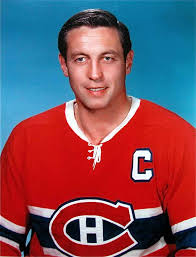 MONTREAL - Joseph Jean Arthur Béliveau was a Canadian professional ice hockey player who played parts of 20 seasons with the National Hockey League's Montreal Canadiens.
Montreal Canadiens legend Jean Béliveau passed away at the age of 83 on Tuesday night, the team announced. He earned the nickname Le Gros Bill.
But both on and off the ice, Béliveau was better known for his skill, sportsmanship and a gentlemanly air that very nearly made him Canada's Governor General in 1994.
At the time, his recurring heart problems and concern for his recently widowed daughter and her small children kept him from accepting the offer.
"Like millions of hockey fans who followed the life and the career of Jean Beliveau, the Canadiens today mourn the passing of a man whose contribution to the development of our sport and our society was unmeasurable," team owner Geoff Molson said in a statement posted on the Canadiens' website.
"Jean Beliveau was a great leader, a gentleman and arguably the greatest ambassador our game has ever known," Molson added.
One of the finest centres who ever played, Béliveau helped lead the Montreal Canadiens to an unprecedented five straight Stanley Cups during the 1950s and 1960s - 10 in all over a nearly 20-year career.
"I always enjoyed the playoffs," Béliveau said. "I enjoyed playing in it. Everybody, not only the players, but management, the fans, maybe the press, everybody is so much more nervous. So I enjoyed every game."
When he retired in 1971, he joined the Canadiens' front office as an executive and goodwill ambassador. As a result, his name appears on the Stanley Cup a record 17 times, a feat unlikely to be duplicated. ... Read more at CBC Sport News
Biography of Jean Béliveau - Wikipedia
Montreal Canadiens legend Jean Béliveau passed away at the age of 83 on Tuesday night, the team announced. He earned the nickname Le Gros Bill.
But both on and off the ice, Béliveau was better known for his skill, sportsmanship and a gentlemanly air that very nearly made him Canada's Governor General in 1994.
At the time, his recurring heart problems and concern for his recently widowed daughter and her small children kept him from accepting the offer.
"Like millions of hockey fans who followed the life and the career of Jean Beliveau, the Canadiens today mourn the passing of a man whose contribution to the development of our sport and our society was unmeasurable," team owner Geoff Molson said in a statement posted on the Canadiens' website.
Watch Obituary Video Remembering Hockey Legend Jean Béliveau
"Jean Beliveau was a great leader, a gentleman and arguably the greatest ambassador our game has ever known," Molson added.
One of the finest centres who ever played, Béliveau helped lead the Montreal Canadiens to an unprecedented five straight Stanley Cups during the 1950s and 1960s - 10 in all over a nearly 20-year career.
"I always enjoyed the playoffs," Béliveau said. "I enjoyed playing in it. Everybody, not only the players, but management, the fans, maybe the press, everybody is so much more nervous. So I enjoyed every game."
When he retired in 1971, he joined the Canadiens' front office as an executive and goodwill ambassador. As a result, his name appears on the Stanley Cup a record 17 times, a feat unlikely to be duplicated. ... Read more at CBC Sport News
Biography of Jean Béliveau - Wikipedia


