
Showing posts with label Deaf Society. Show all posts
Showing posts with label Deaf Society. Show all posts
VIDEO: Deaf News - Rare wedding of a Deaf couple and a Deaf bridal party.
NAIROBI, KENYA - Marriage is one of the most important and beautiful expressions of love. Well, a couple with hearing problems tied the knot amid cheers from family and friends but more fascinating, the bridal party too was Deaf. The colourful wedding was held in PCEA Nyamachaki church, Nyeri county. And as NTV’s Rose Wangui reports, the ceremony was conducted in Kenyan Sign Language.
Follow NTV News on Social Media:
For more news visit http://ntv.co.ke
Follow us on Twitter http://twitter.com/ntvkenya
Like our FaceBook page http://facebook.com/NtvKenya
Like us on Instagram http://instagram.com/ntvkenya
NAIROBI, KENYA - Marriage is one of the most important and beautiful expressions of love. Well, a couple with hearing problems tied the knot amid cheers from family and friends but more fascinating, the bridal party too was Deaf. The colourful wedding was held in PCEA Nyamachaki church, Nyeri county. And as NTV’s Rose Wangui reports, the ceremony was conducted in Kenyan Sign Language.
Follow NTV News on Social Media:
For more news visit http://ntv.co.ke
Follow us on Twitter http://twitter.com/ntvkenya
Like our FaceBook page http://facebook.com/NtvKenya
Like us on Instagram http://instagram.com/ntvkenya
Deaf News: American Sign Language Version - Audism Free America Video Letter to the Alexander Graham Bell Association for the Deaf.
 WASHINGTON DC -- Audism Free America (AFA) share a video letter to the Alexander Graham Bell Association for the Deaf (AG Bell) in American Sign Language with all of you. Recently, there is an appalling wave of reaction by the Deaf community in regards to AG Bell's response to Washington Post's "The Reliable Source" who accuses Nyle DiMarco dispelling the myths about deafness.
Follow Audism Free America on Social Media:
Subscribe - https://youtube.com/AudismFreeAmerica
Facebook - https://facebook.com/pages/audism-free-america
Twitter - https://twitter.com/endaudism
History of the Deaf Americans - Through Deaf Eyes - Documentary Film
Related AFA:
ASL & Deaf Pride Parade 2015 At Washington DC
ASL & Deaf Pride Parade 2015 In DC
i Deaf News - ASL Deaf Pride Parade By AFA
Related: #AG Bell
Deaf Student Bullied at the AG Bell School
Deaf People Bullied By The AG Bell Association
AG Bell's Letter About Nyle DiMarco Controversy
Audism Free America Video Letter To AG Bell
NTID/RIT Facutlty & Staff Open Letter To AG Bell
Deaf Teachers: Open Letter To AG Bell Association
Cochlear Implant Failures Lawsuits & AG Bell
AG Bell & CI Companies
How AG Bell Association Destroy Deaf Culture
Alexander Graham Bell - Theft Of The Century
#LiesAGBellToldMyParents - Indiana HB 1367
WASHINGTON DC -- Audism Free America (AFA) share a video letter to the Alexander Graham Bell Association for the Deaf (AG Bell) in American Sign Language with all of you. Recently, there is an appalling wave of reaction by the Deaf community in regards to AG Bell's response to Washington Post's "The Reliable Source" who accuses Nyle DiMarco dispelling the myths about deafness.Dear President Meredith K Sugar,
We, Audism Free America, are writing in response to your response to the Washington Post article regarding Mr. Nyle DiMarco, in which you stated; "It is our hope to dispel the myths about deafness.” It has become apparent that by now you have most likely seen the many letters from members of the Deaf community, and as well as from academic researchers who have revealed the truth about your misinformation showing that Deaf children, from both Deaf and Hearing families, have clearly thrived when exposed to American Sign Language early in life.
This is not the first time that the AG Bell Association has imposed misinformation and worked to assert to the general public reinforcing the attitudes of audism and linguicism. In 2009, we presented to your former President Graham, along with other AG Bell representatives, a list of demands at a sit down face to face meeting. These demands were taken to your Board and rejected. The demands stated that:
1. the AG Bell Association and Academy cease and desist from denying Deaf infants, children, and their families the right to a natural and fully accessible language.
2. the AG Bell Association cease and desist from misinforming the public and the media about ASL and Deaf people. The AG Bell Association has not retracted its letter to Pepsi objecting to the commercial featuring ASL in a positive light and continually paints Deaf ASL users as unsuccessful and dependent.
3. the AG Bell Association cease and desist its incestuous relationship with cochlear implant manufacturers and join the AFA in calling for an independent and impartial study of the physical, psychological, and social impact of cochlear implants on infants, children and adolescents.
The second item listed can now be amended to demand that the AG Bell Association, additionally, retract your statements concerning the response to Mr. Nyle DiMarco in the Washington Post.
If you are truly concerned about dispelling myths, you may wish to focus on your founder. A.G. Bell, the man, through publicized reports was an eugenicist, xenophobe, and audist along with recent reports that he was also a thief and plagiarist (see D. Baynton, H. Lane, and S. Shulman, as well as Bell’s own writings).
Your Association should be held accountable for the many Deaf children and their families who have been deprived of an accessible language in their early years which have resulted in negative impacts psychologically, educationally, and economically, (see Humphries, et al., 2012 and Penicaud, et al, 2013).
As a Deaf grassroots organization, we are informing you that your organization, made up of primarily Hearing people, has NO right to misrepresent Deaf people in the media and NO right to actively promote the denial of human and linguistic rights of Deaf children.
We, Deaf community members, our families and allies are proud to have Mr. Nyle DiMarco as a role model and advocate for our future generations of Deaf children. If you need further evidence that there is a thriving Deaf community who will ensure that Deaf children will CONTINUE TO BE DEAF, please see the social media campaigns #whyIsign and #iamdeaf.
Finally, this letter is to inform you that AFA will now host another rally at your annual conference in Denver, Colorado. Please let us know if YOU would like to meet with US prior to the conference in order to retract your letters and issue a formal apology. Please see the attached flyer for more information.
Let Freedom Roll,
Audism Free America
Follow Audism Free America on Social Media:
Subscribe - https://youtube.com/AudismFreeAmerica
Facebook - https://facebook.com/pages/audism-free-america
Twitter - https://twitter.com/endaudism
History of the Deaf Americans - Through Deaf Eyes - Documentary Film
Related AFA:
ASL & Deaf Pride Parade 2015 At Washington DC
ASL & Deaf Pride Parade 2015 In DC
i Deaf News - ASL Deaf Pride Parade By AFA
Related: #AG Bell
Deaf Student Bullied at the AG Bell School
Deaf People Bullied By The AG Bell Association
AG Bell's Letter About Nyle DiMarco Controversy
Audism Free America Video Letter To AG Bell
NTID/RIT Facutlty & Staff Open Letter To AG Bell
Deaf Teachers: Open Letter To AG Bell Association
Cochlear Implant Failures Lawsuits & AG Bell
AG Bell & CI Companies
How AG Bell Association Destroy Deaf Culture
Alexander Graham Bell - Theft Of The Century
#LiesAGBellToldMyParents - Indiana HB 1367
Deaf News: Lydia Callis, longtime advocate of Deaf Rights, won admirers as Mayor Michael R. Bloomberg’s sign-language.

NEW YORK CITY -- New York Times: Lydia Callis wanted to get her mother a gym membership for Christmas last year. When she called to arrange a consultation, she mentioned that her mom (who lives in Arizona) is Deaf and would need a sign-language interpreter for the session. The health club said it would not provide a signer. Ms. Callis who became an Internet sensation during Hurricane Sandy as Mayor Michael R. Bloomberg’s exuberant sign-language interpreter told the club that it was actually required by law to do so. Still it refused, and Ms. Callis, who was calling from Manhattan, gave up.
 Last year was the 25th anniversary of the Americans With Disabilities Act, and yet this kind of scenario plays out regularly for people who are Deaf and Hard of Hearing. While the broader culture has become accustomed to certain changes the law has engendered, particularly wheelchair access, the rights of the Deaf have frequently been misunderstood or simply disregarded.
Recently, however, a Deaf rights movement has begun to gain ground, particularly in New York.
One sign of this momentum has been a flurry of lawsuits. Last year, the city’s Department of Homeless Services settled a case that charged its shelters with failing to provide American Sign Language interpreters for Deaf residents, and a suit filed last summer in Westchester County claimed that two hospitals refused a Deaf couple’s requests for interpreters after the husband had a heart attack.
Another case involved Diana Williams, a Deaf woman from Staten Island who was arrested in 2011 and was denied a sign-language interpreter, as the federal law dictates. In October, the Police Department settled her lawsuit for $750,000. Her lawyers, from the Eisenberg & Baum Law Center for Deaf and Hard of Hearing, said it was one of the biggest payouts of its kind.
“What’s disturbing about all these lawsuits is that the A.D.A. has been in effect for several decades,” Eric Baum, one of the firm’s founders, recently said. Mr. Baum said that his firm had litigated about 100 Deaf discrimination cases, roughly half in the New York metropolitan area, many dealing with a failure to provide interpreters. He was sitting in the Union Square office alongside the Law Center’s co-directors: Andrew Rozynski, a lawyer and fluent A.S.L. signer whose parents are deaf, and Sheryl Eisenberg-Michalowski, a Deaf rights liaison who was born Deaf...Read More.
Related Post: #Lydia Callis
NEW YORK CITY -- New York Times: Lydia Callis wanted to get her mother a gym membership for Christmas last year. When she called to arrange a consultation, she mentioned that her mom (who lives in Arizona) is Deaf and would need a sign-language interpreter for the session. The health club said it would not provide a signer. Ms. Callis who became an Internet sensation during Hurricane Sandy as Mayor Michael R. Bloomberg’s exuberant sign-language interpreter told the club that it was actually required by law to do so. Still it refused, and Ms. Callis, who was calling from Manhattan, gave up.
Last year was the 25th anniversary of the Americans With Disabilities Act, and yet this kind of scenario plays out regularly for people who are Deaf and Hard of Hearing. While the broader culture has become accustomed to certain changes the law has engendered, particularly wheelchair access, the rights of the Deaf have frequently been misunderstood or simply disregarded.Recently, however, a Deaf rights movement has begun to gain ground, particularly in New York.
One sign of this momentum has been a flurry of lawsuits. Last year, the city’s Department of Homeless Services settled a case that charged its shelters with failing to provide American Sign Language interpreters for Deaf residents, and a suit filed last summer in Westchester County claimed that two hospitals refused a Deaf couple’s requests for interpreters after the husband had a heart attack.
Another case involved Diana Williams, a Deaf woman from Staten Island who was arrested in 2011 and was denied a sign-language interpreter, as the federal law dictates. In October, the Police Department settled her lawsuit for $750,000. Her lawyers, from the Eisenberg & Baum Law Center for Deaf and Hard of Hearing, said it was one of the biggest payouts of its kind.
“What’s disturbing about all these lawsuits is that the A.D.A. has been in effect for several decades,” Eric Baum, one of the firm’s founders, recently said. Mr. Baum said that his firm had litigated about 100 Deaf discrimination cases, roughly half in the New York metropolitan area, many dealing with a failure to provide interpreters. He was sitting in the Union Square office alongside the Law Center’s co-directors: Andrew Rozynski, a lawyer and fluent A.S.L. signer whose parents are deaf, and Sheryl Eisenberg-Michalowski, a Deaf rights liaison who was born Deaf...Read More.
Related Post: #Lydia Callis
VIDEO [CC] - #whyIsign Kickstarter fundraiser introduction by Brandon Kazen-Maddox.

SAN FRANCISCO -- The focus of this video is a #whyIsign Kickstarter fundraiser. This Kickstarter's goal is to create a brand-new ASL music video in collaboration with 13 Deaf, Hard-of-Hearing, CODA and GODA artists.
The Kickstarter is set at $10,000 and 80% of the money raised will go directly back to the Deaf community to support Deaf-owned and operated businesses in the Bay Area. The remaining 20% will go towards the production of the ASL music video and to pay the Deaf artists for their work in this project.
We will launch the Kickstarter at the beginning of April and it will last for one month! The link will be posted here once the fundraiser is live.
Please share this video with as many individuals, groups, and organizations as you can so we can contribute to De'Via art and our Deaf community! Thank you!
Related: #whyIsign - Trending Campaign Goes Viral
Purchase your #whyisign t-shirt - http://route66promo.com/product/whyisign
Follow #whyIsign on social media:
Youtube - https://youtube.com/whyisign
Facebook - https://facebook.com/whyisign
Twitter - https://twitter.com/hashtag/whyisign
Instagram - https://instagram.com/whyisign/
Official Website - http://www.whyisign.com
SAN FRANCISCO -- The focus of this video is a #whyIsign Kickstarter fundraiser. This Kickstarter's goal is to create a brand-new ASL music video in collaboration with 13 Deaf, Hard-of-Hearing, CODA and GODA artists.
The Kickstarter is set at $10,000 and 80% of the money raised will go directly back to the Deaf community to support Deaf-owned and operated businesses in the Bay Area. The remaining 20% will go towards the production of the ASL music video and to pay the Deaf artists for their work in this project.
We will launch the Kickstarter at the beginning of April and it will last for one month! The link will be posted here once the fundraiser is live.
Please share this video with as many individuals, groups, and organizations as you can so we can contribute to De'Via art and our Deaf community! Thank you!
Related: #whyIsign - Trending Campaign Goes Viral
Purchase your #whyisign t-shirt - http://route66promo.com/product/whyisign
Follow #whyIsign on social media:
Youtube - https://youtube.com/whyisign
Facebook - https://facebook.com/whyisign
Twitter - https://twitter.com/hashtag/whyisign
Instagram - https://instagram.com/whyisign/
Official Website - http://www.whyisign.com
VIDEO [CC] - ASL Poetry by Jenny Locy: “You Have to be Deaf to Understand” Poem by Willard J. Madsen.
Jenny Locy the Deaf activist and social media consultant shares video on YouTube the ASL poetry “You Have to be Deaf to Understand” written by Willard J. Madsen This video in sign language translation and closed captioning to be fully accessible for hard of hearing and hearing individuals.
Follow Jenny Locy on Social Media:
YouTube - https://youtube.com/channel/jennylocy
Twitter - https://twitter.com/jennylocy
Instagram - http://websta.me/n/jennylocy
Linkedin - https://linkedin.com/in/jennylocy
Jenny Locy the Deaf activist and social media consultant shares video on YouTube the ASL poetry “You Have to be Deaf to Understand” written by Willard J. Madsen This video in sign language translation and closed captioning to be fully accessible for hard of hearing and hearing individuals.
To activate this feature, press the "CC" button.
Follow Jenny Locy on Social Media:
YouTube - https://youtube.com/channel/jennylocy
Twitter - https://twitter.com/jennylocy
Instagram - http://websta.me/n/jennylocy
Linkedin - https://linkedin.com/in/jennylocy
VIDEO: Ricky Taylor's ASL rants "All About Racism & Privilege."
 The video producer by openly Deaf Gay Ricky Taylor aka Ridor9th, also well known as one of the most controversial bloggers in Deaf community, posted and shares the ASL rant vlog. Please note that this is 64 minutes long. Covering on many things in life about racism & privilege which is widespread all across many Deaf communities, Deaf schools, Deaf sports, Deaf individuals, Deaf cliques, Deaf organizations on every level.
* Disclaimer & Background
* The List of Privileges & Oppression
* Did You Do This On Your Free Time?
* Deaf Privileges
* 5, not 4, Prime Examples % Academic & College Bowls % Clerc Classic % Leala Holcomb % The Bonheyos % Nyle DiMarco
* Fundraising I: Deaf Privileges
* Fundraising II: Racism
* Remember Dr. Angela McCaskill?
* Angela's Thoughts (and Felt) Are Valid
* Unequal Response: Racism? By Franklin Jones Jr
* THIS IS PRIVILEGE
* Gallaudet Must Discipline Mary Keane
* No, You Are Not Qualified
* #BlackLivesMatter
* 2 Incidents in North Carolina and Kentucky
* Where is Marlee Matlin?
* Trump Made Fun of Disabled People
* Public Figure & Private Person
* Border Wall Is (going to American's ultimate) Suicidal.
This is it - You've reached the place that perhaps the only Deaf Gay man that knew almost ... everything about your lives. Enjoy the ride. Cheers, R-
Follow Ridor9th on social media:
Subscribe - http://youtube.com/ridor9th
Twitter - https://twitter.com/ridor9th
Twitpic - http://twitpic.com/photos/ridor9th
Tumblr - https://twitter.com/ridor9th
PlusGoogle - https://plus.google.com/ridor9th/posts
Blog - http://ridor.blogspot.com
Related: #Deaf, Gay and Angry
The video producer by openly Deaf Gay Ricky Taylor aka Ridor9th, also well known as one of the most controversial bloggers in Deaf community, posted and shares the ASL rant vlog. Please note that this is 64 minutes long. Covering on many things in life about racism & privilege which is widespread all across many Deaf communities, Deaf schools, Deaf sports, Deaf individuals, Deaf cliques, Deaf organizations on every level.* Disclaimer & Background
* The List of Privileges & Oppression
* Did You Do This On Your Free Time?
* Deaf Privileges
* 5, not 4, Prime Examples % Academic & College Bowls % Clerc Classic % Leala Holcomb % The Bonheyos % Nyle DiMarco
* Fundraising I: Deaf Privileges
* Fundraising II: Racism
* Remember Dr. Angela McCaskill?
* Angela's Thoughts (and Felt) Are Valid
* Unequal Response: Racism? By Franklin Jones Jr
* THIS IS PRIVILEGE
* Gallaudet Must Discipline Mary Keane
* No, You Are Not Qualified
* #BlackLivesMatter
* 2 Incidents in North Carolina and Kentucky
* Where is Marlee Matlin?
* Trump Made Fun of Disabled People
* Public Figure & Private Person
* Border Wall Is (going to American's ultimate) Suicidal.
This is it - You've reached the place that perhaps the only Deaf Gay man that knew almost ... everything about your lives. Enjoy the ride. Cheers, R-
Follow Ridor9th on social media:
Subscribe - http://youtube.com/ridor9th
Twitter - https://twitter.com/ridor9th
Twitpic - http://twitpic.com/photos/ridor9th
Tumblr - https://twitter.com/ridor9th
PlusGoogle - https://plus.google.com/ridor9th/posts
Blog - http://ridor.blogspot.com
Related: #Deaf, Gay and Angry
Deaf News: Deaf cosmetologist student teaching lessons on accessibility at the Colorado community college.
 CORTEZ, CO -- Scottsbluff Star Herald: Going back to school as a single parent with two kids is challenging for many.
For Amanda Schuster getting certified as a cosmetologist has had an additional layer of complexity because she is completely Deaf.
To get the most from her classes, she taught her instructor and others at the Southwest Colorado Community College how to accommodate her, helping to pave the way for other students that might follow her.
"I've never allowed my deafness to stop me," she said, through her interpreter Dawn Kern-Anderson.
Styling hair has always been one of Schuster's passions, but when she decided to go back to school to get certified it required some coordination with the college.
The college didn't have an interpreter on staff, so she got in touch with Kern-Anderson, her interpreter from high school to translate her classes. It's a service that the college pays for.
While Schuster can read lips, Kern-Anderson makes it much easier for her to keep up with her peers.
"It makes me feel like a normal person in the classroom," she said.
Schuster is Brenda Knapp's first Deaf student and the experience has taught her to slow down and avoid tangents in her lectures that might be hard to translate.
"You have to be very structured," Knapp said.
While Schuster appreciates help from Kern-Anderson, she has been in the hearing world her whole life and she doesn't need an interpreter all the time.
Her parents always pushed her to communicate in both English and American Sign Language after she lost her hearing at 14 months to spinal meningitis.
She attended Project Talk in California, which specializes in helping Deaf children learn to talk, and speech therapy through the San Juan Board of Cooperative Educational Services.
Growing up she also excelled in sports including tennis, cheer leading, volleyball and sharp-shooting. After high school, she attended two years college in California and majored in photography.
"I never let anything stop me, although people do try," she said.
Her long-term goal after she finishes classes in cosmetology and aesthetics is to open a salon and photography business.
But before she can take her state test to get certified, she has to complete 1,800 hours in class.
During all her time in school, she has noticed several ways the school can be more accessible and safe for Deaf students.
For example, after the school held an assembly on school safety following a college shooting in Oregon, she suggested the school install TVs and more lights as part of the alarm system. These could help make Deaf students aware of an emergency.
In addition, none of the other students are able to bring their phones into class. But Schuster can't be reached through a regular telephone during personal emergencies, so Knapp made an exception for her.
But rather than being given special treatment, Schuster would be prefer the school have video phones available so she could communicate not only with her family, but with school administrators on different campuses.
"I'm trying to improve the systems, not just for me but for everyone," she said.
SOURCE
CORTEZ, CO -- Scottsbluff Star Herald: Going back to school as a single parent with two kids is challenging for many.For Amanda Schuster getting certified as a cosmetologist has had an additional layer of complexity because she is completely Deaf.
To get the most from her classes, she taught her instructor and others at the Southwest Colorado Community College how to accommodate her, helping to pave the way for other students that might follow her.
"I've never allowed my deafness to stop me," she said, through her interpreter Dawn Kern-Anderson.
Styling hair has always been one of Schuster's passions, but when she decided to go back to school to get certified it required some coordination with the college.
The college didn't have an interpreter on staff, so she got in touch with Kern-Anderson, her interpreter from high school to translate her classes. It's a service that the college pays for.
While Schuster can read lips, Kern-Anderson makes it much easier for her to keep up with her peers.
"It makes me feel like a normal person in the classroom," she said.
Schuster is Brenda Knapp's first Deaf student and the experience has taught her to slow down and avoid tangents in her lectures that might be hard to translate.
"You have to be very structured," Knapp said.
While Schuster appreciates help from Kern-Anderson, she has been in the hearing world her whole life and she doesn't need an interpreter all the time.
Her parents always pushed her to communicate in both English and American Sign Language after she lost her hearing at 14 months to spinal meningitis.
She attended Project Talk in California, which specializes in helping Deaf children learn to talk, and speech therapy through the San Juan Board of Cooperative Educational Services.
Growing up she also excelled in sports including tennis, cheer leading, volleyball and sharp-shooting. After high school, she attended two years college in California and majored in photography.
"I never let anything stop me, although people do try," she said.
Her long-term goal after she finishes classes in cosmetology and aesthetics is to open a salon and photography business.
But before she can take her state test to get certified, she has to complete 1,800 hours in class.
During all her time in school, she has noticed several ways the school can be more accessible and safe for Deaf students.
For example, after the school held an assembly on school safety following a college shooting in Oregon, she suggested the school install TVs and more lights as part of the alarm system. These could help make Deaf students aware of an emergency.
In addition, none of the other students are able to bring their phones into class. But Schuster can't be reached through a regular telephone during personal emergencies, so Knapp made an exception for her.
But rather than being given special treatment, Schuster would be prefer the school have video phones available so she could communicate not only with her family, but with school administrators on different campuses.
"I'm trying to improve the systems, not just for me but for everyone," she said.
SOURCE
Deaf News: When it comes to domestic abuse and sexual assault reporting, Deaf women are underserved by police in the United States.

NEW YORK CITY -- International Business Times: The abuse started with a few insults. When Wendy, a Deaf woman, met her college boyfriend, he was popular and attractive, so she put up with the harsh way he spoke to her. Then he gave her a black eye.
“I thought it was normal, and that that was love; that it was just a part of when you care about somebody,” Wendy, 38, who didn’t want to be identified by her real name because she has yet to go public with her story, said through a sign language interpreter. “Then the insults became a little bit physical, and then a cycle began.”
The cycle included her boyfriend holding her hostage in locked rooms after arguments, once almost forcing her to go to the bathroom in a bucket because she couldn’t leave. He beat her up on her 27th birthday, but she didn’t report it at least partly out of fear no one would believe her. She tells the story of a fellow Deaf friend who was abused by a significant other, and when police came to investigate, they didn’t believe the Deaf friend was abused.
“It’s why Deaf people don’t report to police,” Wendy, a Deaf community advocate in the central New York area, said. “It’s always ‘they won’t believe me.’ ”
Deaf women experience sexual and domestic abuse at much higher rates than women who hear, but are unlikely to report it. A new initiative announced last week from the Vera Institute of Justice, a New York City-based nonprofit, and the U.S. Department of Justice’s Office for Victims of Crime aims to change that by training police officers to facilitate communication with Deaf victims, such as teaching them how to find legitimate sign language interpreters. Activists say many law enforcement officials don’t know the best way to communicate with Deaf victims, discouraging the victims from reporting abuse.
“Now, they don’t have equal access to get the help they need,” Erin Esposito, a Deaf woman and executive director of the Rochester, New York-based Advocacy Services for Abused Deaf Victims, said of Deaf victims. “The goal is to create an atmosphere where Deaf people can feel confident to go into a police station and get help.”
The Translating Justice Initiative is a three-year program, funded with a $1 million grant from the U.S. Justice Department that will go toward virtual and in-person training sessions of police officers, prosecutors and court administrators to help them better communicate with the Deaf, as well as the hard of hearing and those with limited English proficiency. The training is intended to enable police agencies to look at their policies regarding Deaf victims, revamp them to better facilitate communication and show officers how to better use resources already out there to help the Deaf, said Susan Shah, one of the co-leaders of the initiative.
Officers will be instructed in telephonic interpretation services, finding interpreters in the community and ways to avoid outdated technology, Shah said. Another major part of the training is teaching police to reach out to the Deaf community so Deaf victims of domestic and sexual abuse can feel more comfortable coming forward.
There is no cookie-cutter training for every police agency as every one has different levels of how well they interact with Deaf people, Esposito said. While there have been localized efforts to fund programs for Deaf victims, this is one of the only national initiatives providing this type of training, activists said.
No one event spawned the project, which has been in development with the Justice Department and other agencies, such as Advocacy Services for Abused Deaf Victims and the National Center for Victims of Crime. The Office for Victims of Crime said in a statement that inroads had been made in recent years to serve victims who have disabilities or limited English proficiency, and that the program came about to bring together local efforts to help Deaf victims.... Read More.
Related:
CPD Gets New VRS Equipment To Assist Deafies
Deaf Victims Sues NYPD For Wrongly Arrested
Deaf Woman Sues NYPD For Wrongly Arrested
Deaf Woman Sues NYPD For Denying Interpreter
Deaf, Gay and Angry - Do Not Call Cops !!
NEW YORK CITY -- International Business Times: The abuse started with a few insults. When Wendy, a Deaf woman, met her college boyfriend, he was popular and attractive, so she put up with the harsh way he spoke to her. Then he gave her a black eye.
“I thought it was normal, and that that was love; that it was just a part of when you care about somebody,” Wendy, 38, who didn’t want to be identified by her real name because she has yet to go public with her story, said through a sign language interpreter. “Then the insults became a little bit physical, and then a cycle began.”
The cycle included her boyfriend holding her hostage in locked rooms after arguments, once almost forcing her to go to the bathroom in a bucket because she couldn’t leave. He beat her up on her 27th birthday, but she didn’t report it at least partly out of fear no one would believe her. She tells the story of a fellow Deaf friend who was abused by a significant other, and when police came to investigate, they didn’t believe the Deaf friend was abused.
“It’s why Deaf people don’t report to police,” Wendy, a Deaf community advocate in the central New York area, said. “It’s always ‘they won’t believe me.’ ”
Deaf women experience sexual and domestic abuse at much higher rates than women who hear, but are unlikely to report it. A new initiative announced last week from the Vera Institute of Justice, a New York City-based nonprofit, and the U.S. Department of Justice’s Office for Victims of Crime aims to change that by training police officers to facilitate communication with Deaf victims, such as teaching them how to find legitimate sign language interpreters. Activists say many law enforcement officials don’t know the best way to communicate with Deaf victims, discouraging the victims from reporting abuse.
“Now, they don’t have equal access to get the help they need,” Erin Esposito, a Deaf woman and executive director of the Rochester, New York-based Advocacy Services for Abused Deaf Victims, said of Deaf victims. “The goal is to create an atmosphere where Deaf people can feel confident to go into a police station and get help.”
The Translating Justice Initiative is a three-year program, funded with a $1 million grant from the U.S. Justice Department that will go toward virtual and in-person training sessions of police officers, prosecutors and court administrators to help them better communicate with the Deaf, as well as the hard of hearing and those with limited English proficiency. The training is intended to enable police agencies to look at their policies regarding Deaf victims, revamp them to better facilitate communication and show officers how to better use resources already out there to help the Deaf, said Susan Shah, one of the co-leaders of the initiative.
Officers will be instructed in telephonic interpretation services, finding interpreters in the community and ways to avoid outdated technology, Shah said. Another major part of the training is teaching police to reach out to the Deaf community so Deaf victims of domestic and sexual abuse can feel more comfortable coming forward.
There is no cookie-cutter training for every police agency as every one has different levels of how well they interact with Deaf people, Esposito said. While there have been localized efforts to fund programs for Deaf victims, this is one of the only national initiatives providing this type of training, activists said.
No one event spawned the project, which has been in development with the Justice Department and other agencies, such as Advocacy Services for Abused Deaf Victims and the National Center for Victims of Crime. The Office for Victims of Crime said in a statement that inroads had been made in recent years to serve victims who have disabilities or limited English proficiency, and that the program came about to bring together local efforts to help Deaf victims.... Read More.
Related:
CPD Gets New VRS Equipment To Assist Deafies
Deaf Victims Sues NYPD For Wrongly Arrested
Deaf Woman Sues NYPD For Wrongly Arrested
Deaf Woman Sues NYPD For Denying Interpreter
Deaf, Gay and Angry - Do Not Call Cops !!
VIDEO: Deaf News - According to the researchers, the cascading impact of hearing loss on access to school communication.
 Fragmented Hearing, Effort, Listening, Comprehension, Fatigue and Pace of Learning. Hearing Loss is invisible. Someone observing a student with hearing loss may believe that he or she has an attention problem or a learning disability as hearing loss can also impact perceiving, language processing, processing speed, memory and attention. Unlike ADHD or LD, learning issues caused by hearing loss are not due to a disorder (an issue with brain processes). Instead the learning issues are secondary to delays because the child has incomplete access to speech occurring around him or her, especially soft speech or completely understanding someone talking from a distance further than 3-6 feet.
Fragmented Hearing - Our educational system is based on the assumption that students in the classroom will perceive, and therefore understand, all of what the teacher is saying. When much information received in school is fragmented because of hearing loss, learning consequences are likely. Even with the latest hearing technology, normal hearing ability is not restored by hearing devices. Even aided thresholds of 20 dB HL will cause soft speech, high pitch speech sounds and unemphasized brief words to be undetected or too quiet to process.

It is not unusual for children with hearing loss to have a 20% ‘listening gap’ as compared to class peers who may miss only 5% of information 1. The image shows a story about Fran the frog who has a sore throat. As you can see, comprehending the meaning of the story is impacted when 20% of the information missing. Even if a child is able to perform well in a quiet setting using hearing devices, a classroom setting is typically noisy, with fast-paced peer-to-peer conversations and teachers that move about the classroom, causing significant listening challenges. These conditions typically result in barriers to access.
Increased Effort - Effort refers to the exertion of physical or mental power. Listening effort refers to the attention necessary to understand speech. Ease of listening is the perceive difficulty of the listening situation by the listener. Even low noise in the environment will interact with the fragmented hearing to interfere with their speech understanding. Children with hearing loss work harder than their peers to listen leaving fewer cognitive resources to understand speech in the classroom as compared to class peers.
CSS Movies presents "Alone In A Hearing World" shows true to life scenarios of a young Deaf boy growing up in a hearing world. With family members who can't communicate and continuous misunderstandings by his teachers and coaches, he is forced to live in a world of isolation. However, when he pleas for his Mothers understanding and falls short, he ends up in the only place he seems to find acceptance.
It has been assumed that speechreading will help children to compensate for what is missed due to fragmented hearing. Research results make it clear that speechreading (lipreading) help children to compensate for what was missed...read more: http://successforkidswithhearingloss.com/pdf.
Sources:
http://successforkidswithhearingloss.com/2014/06/Cascading-Impact-of-Hearing-Loss-on-Access-to-School-Communication.
http://successforkidswithhearingloss.com/2014/06/The-Cascading-Impact-of-Hearing-Loss.
Related:
Living In Between The Deaf And Hearing Worlds
Dropout Rate Among Mainstream Deaf Students
Deaf Awareness 'Voiceless' Short Film
Deaf Girl's Bullying In Mainstream School
Deaf Student Bullied At Alexander Graham Bell School
Mainstream School Is Failing Deaf Students
Petition | Stop Moving Deaf To Mainstream Schools
Fragmented Hearing, Effort, Listening, Comprehension, Fatigue and Pace of Learning. Hearing Loss is invisible. Someone observing a student with hearing loss may believe that he or she has an attention problem or a learning disability as hearing loss can also impact perceiving, language processing, processing speed, memory and attention. Unlike ADHD or LD, learning issues caused by hearing loss are not due to a disorder (an issue with brain processes). Instead the learning issues are secondary to delays because the child has incomplete access to speech occurring around him or her, especially soft speech or completely understanding someone talking from a distance further than 3-6 feet.Fragmented Hearing - Our educational system is based on the assumption that students in the classroom will perceive, and therefore understand, all of what the teacher is saying. When much information received in school is fragmented because of hearing loss, learning consequences are likely. Even with the latest hearing technology, normal hearing ability is not restored by hearing devices. Even aided thresholds of 20 dB HL will cause soft speech, high pitch speech sounds and unemphasized brief words to be undetected or too quiet to process.
It is not unusual for children with hearing loss to have a 20% ‘listening gap’ as compared to class peers who may miss only 5% of information 1. The image shows a story about Fran the frog who has a sore throat. As you can see, comprehending the meaning of the story is impacted when 20% of the information missing. Even if a child is able to perform well in a quiet setting using hearing devices, a classroom setting is typically noisy, with fast-paced peer-to-peer conversations and teachers that move about the classroom, causing significant listening challenges. These conditions typically result in barriers to access.
Increased Effort - Effort refers to the exertion of physical or mental power. Listening effort refers to the attention necessary to understand speech. Ease of listening is the perceive difficulty of the listening situation by the listener. Even low noise in the environment will interact with the fragmented hearing to interfere with their speech understanding. Children with hearing loss work harder than their peers to listen leaving fewer cognitive resources to understand speech in the classroom as compared to class peers.
CSS Movies presents "Alone In A Hearing World" shows true to life scenarios of a young Deaf boy growing up in a hearing world. With family members who can't communicate and continuous misunderstandings by his teachers and coaches, he is forced to live in a world of isolation. However, when he pleas for his Mothers understanding and falls short, he ends up in the only place he seems to find acceptance.
It has been assumed that speechreading will help children to compensate for what is missed due to fragmented hearing. Research results make it clear that speechreading (lipreading) help children to compensate for what was missed...read more: http://successforkidswithhearingloss.com/pdf.
Sources:
http://successforkidswithhearingloss.com/2014/06/Cascading-Impact-of-Hearing-Loss-on-Access-to-School-Communication.
http://successforkidswithhearingloss.com/2014/06/The-Cascading-Impact-of-Hearing-Loss.
Related:
Living In Between The Deaf And Hearing Worlds
Dropout Rate Among Mainstream Deaf Students
Deaf Awareness 'Voiceless' Short Film
Deaf Girl's Bullying In Mainstream School
Deaf Student Bullied At Alexander Graham Bell School
Mainstream School Is Failing Deaf Students
Petition | Stop Moving Deaf To Mainstream Schools
VIDEO [CC] - #DeafTalent from Sweden - Deaf people can't be actors ?!?
Today is all about #DeafTalent - Jonna Delvert is going to share her experiences with you guys as Swedish actor herself. Delvert want everyone to know that Deaf people really can do anything they want to do! Only English captioning is available right now while she use Swedish Sign Language. Enjoy!
Follow Jonna Delvert on Social Media:
Subscribe - https://youtube.com/drakeplopp
Instagram - https://instagram.com/jonnadelvert
Twitter - https://twitter.com/jonnadelvert
Vimeo - https://vimeo.com/jonnadelvert
Related: #DeafTalent
Related Jonna Delvert: What Do You Want It To Be Like In A Deaf School ?
Today is all about #DeafTalent - Jonna Delvert is going to share her experiences with you guys as Swedish actor herself. Delvert want everyone to know that Deaf people really can do anything they want to do! Only English captioning is available right now while she use Swedish Sign Language. Enjoy!
To activate this feature, press the "CC" button.
Follow Jonna Delvert on Social Media:
Subscribe - https://youtube.com/drakeplopp
Instagram - https://instagram.com/jonnadelvert
Twitter - https://twitter.com/jonnadelvert
Vimeo - https://vimeo.com/jonnadelvert
Related: #DeafTalent
Related Jonna Delvert: What Do You Want It To Be Like In A Deaf School ?
VIDEO: Deaf News: With cochlear implants, people can turn the noise around them on and off at will.
 The Atlantic: My son travels between silence and sound each day. He received his first cochlear implant when he was a year old. Now in middle school, he’s spent almost his whole life with the ability to turn off the world’s noise at will. In the morning, he attaches the external magnets of his cochlear implants to each side of his head, where they transmit sound from the microphones and speech processors worn over his ears. The electrode arrays in each of his cochleae then stimulate the auditory nerve, and zap, he “hears.”
With his implant, he’s become part of a new generation of profoundly Deaf kids who are assimilated into the mainstream hearing world. In 1989, the Food and Drug Administration approved cochlear implants for children aged 2 years or older; in 2000, the agency green-lit implants for kids as young as 12 months. In the wake of those approvals, thousands of parents like me with no connection to Deaf culture or knowledge of American Sign Language have opted to have their children receive implants. (More than 90 percent of congenitally Deaf babies are born to typical-hearing parents.)
But our decision also placed our son in between two worlds: He is not a member of Deaf signing culture, but neither is he fully part of the hearing community. Instead, he lives somewhere in the middle, joining the 48 million Americans who are challenged with some level of hearing loss.
“Sometimes my brain accounts for the fact that I don’t hear,” he says. “Like if I stomp my foot with my implants off, then my brain kind of makes a sound for it.” He is coming to recognize himself as a “Hearing/Deaf” person an identity that has shaped his sense of social inclusion in unique ways. When his cochlear implants are off, he says, he experiences the world through a kind of “peaceful darkness.” (At times, the decision to turn it on and off is a strategic one: “It is kind of cool to take them off when someone is being annoying to me.”)
According to the FDA, approximately 88,000 people in the U.S. had received cochlear implants as of 2012, including around 38,000 children. The majority of these children attend schools alongside typical-hearing peers, which can be mentally and emotionally taxing as they work to keep up with the sounds around them.
Sometimes words just get all mixed up and you just can’t understand the person. “It’s not like you put the implants on and you can hear just like a normal person,” he reminds me. “Sometimes words just get all mixed up and you just can’t understand the person.” Indeed, experts in field of auditory-verbal therapy stress that implant-wearers must be “hearing athletes” in order to thrive in the cacophonous world. Listening is not a passive endeavor, and pressure to keep up can be tiring.
In recent years, advancements in hearing technology have made it a little bit easier. My son now has the Naida CI Q90, a model from the California-based implant manufacturer Advanced Bionics. The implant, recently approved by the FDA, contains software that more effectively minimizes echo, wind, and reverberation sounds. It has Bluetooth capability, meaning that music, movies, and phone calls can be sent wirelessly into his device. It’s also capable of zooming in on a single voice in a noisy environment.
The implant has gone a long way towards helping him integrate more seamlessly into the everyday hearing world. At school, for example, the teacher's voice is transmitted to our son’s receivers via an FM system above all other sound, and a portable pen-shaped microphone on his school desk picks up small group conversations.
But for a tween, naturally, the biggest concern it is all about fitting in. My son’s hair is now deliberately long enough to cover his hearing devices. When asked how he enjoys music, he says that he likes the feeling of hearing what his friends are listening to.
“Maybe I’m not even hearing the same things as them because I have no idea how people hear,” he says, “but I have the feeling I’m really close to it.”
SOURCE
Alone in a Hearing World
What Is the Leading Cause of Child Abandonment?
History of Abandonment/Abuse - History tends to repeat itself and this is especially true of abuse and neglect patterns. Parents who experienced abuse, neglect or abandonment at the hands of someone when they were a child are more likely to repeat the pattern and abuse, neglect or abandon their own children. UNICEF estimates that 13 million children worldwide have been abandoned by both parents for various reasons, abuse and neglect among them. Watch video in behavioral problems for not learning in sign language and oppression: Alone In A Hearing World.
Cochlear Implants Fail... Lawsuits... Call Lawyer... Cochlear Implant Lawyer for Advanced Bionics and Clarion Devices. Get a free lawsuit review for Advanced Bionics cochlear implants and earlier Clarion models by completing the form on this page. A Deaf attorney is available to review your information and can discuss it by videophone (VP). The lawyers of Weitz and, Luxenberg P.C. have expanded litigation against Advanced Bionics related to defective Advanced bionics and cochlear implants implanted in young children and adults - http://yourlawyer.com/cochlear-implants-lawsuits
The Atlantic: My son travels between silence and sound each day. He received his first cochlear implant when he was a year old. Now in middle school, he’s spent almost his whole life with the ability to turn off the world’s noise at will. In the morning, he attaches the external magnets of his cochlear implants to each side of his head, where they transmit sound from the microphones and speech processors worn over his ears. The electrode arrays in each of his cochleae then stimulate the auditory nerve, and zap, he “hears.”With his implant, he’s become part of a new generation of profoundly Deaf kids who are assimilated into the mainstream hearing world. In 1989, the Food and Drug Administration approved cochlear implants for children aged 2 years or older; in 2000, the agency green-lit implants for kids as young as 12 months. In the wake of those approvals, thousands of parents like me with no connection to Deaf culture or knowledge of American Sign Language have opted to have their children receive implants. (More than 90 percent of congenitally Deaf babies are born to typical-hearing parents.)
But our decision also placed our son in between two worlds: He is not a member of Deaf signing culture, but neither is he fully part of the hearing community. Instead, he lives somewhere in the middle, joining the 48 million Americans who are challenged with some level of hearing loss.
“Sometimes my brain accounts for the fact that I don’t hear,” he says. “Like if I stomp my foot with my implants off, then my brain kind of makes a sound for it.” He is coming to recognize himself as a “Hearing/Deaf” person an identity that has shaped his sense of social inclusion in unique ways. When his cochlear implants are off, he says, he experiences the world through a kind of “peaceful darkness.” (At times, the decision to turn it on and off is a strategic one: “It is kind of cool to take them off when someone is being annoying to me.”)
According to the FDA, approximately 88,000 people in the U.S. had received cochlear implants as of 2012, including around 38,000 children. The majority of these children attend schools alongside typical-hearing peers, which can be mentally and emotionally taxing as they work to keep up with the sounds around them.
Sometimes words just get all mixed up and you just can’t understand the person. “It’s not like you put the implants on and you can hear just like a normal person,” he reminds me. “Sometimes words just get all mixed up and you just can’t understand the person.” Indeed, experts in field of auditory-verbal therapy stress that implant-wearers must be “hearing athletes” in order to thrive in the cacophonous world. Listening is not a passive endeavor, and pressure to keep up can be tiring.
In recent years, advancements in hearing technology have made it a little bit easier. My son now has the Naida CI Q90, a model from the California-based implant manufacturer Advanced Bionics. The implant, recently approved by the FDA, contains software that more effectively minimizes echo, wind, and reverberation sounds. It has Bluetooth capability, meaning that music, movies, and phone calls can be sent wirelessly into his device. It’s also capable of zooming in on a single voice in a noisy environment.
The implant has gone a long way towards helping him integrate more seamlessly into the everyday hearing world. At school, for example, the teacher's voice is transmitted to our son’s receivers via an FM system above all other sound, and a portable pen-shaped microphone on his school desk picks up small group conversations.
But for a tween, naturally, the biggest concern it is all about fitting in. My son’s hair is now deliberately long enough to cover his hearing devices. When asked how he enjoys music, he says that he likes the feeling of hearing what his friends are listening to.
“Maybe I’m not even hearing the same things as them because I have no idea how people hear,” he says, “but I have the feeling I’m really close to it.”
SOURCE
Alone in a Hearing World
What Is the Leading Cause of Child Abandonment?
History of Abandonment/Abuse - History tends to repeat itself and this is especially true of abuse and neglect patterns. Parents who experienced abuse, neglect or abandonment at the hands of someone when they were a child are more likely to repeat the pattern and abuse, neglect or abandon their own children. UNICEF estimates that 13 million children worldwide have been abandoned by both parents for various reasons, abuse and neglect among them. Watch video in behavioral problems for not learning in sign language and oppression: Alone In A Hearing World.
Cochlear Implants Fail... Lawsuits... Call Lawyer... Cochlear Implant Lawyer for Advanced Bionics and Clarion Devices. Get a free lawsuit review for Advanced Bionics cochlear implants and earlier Clarion models by completing the form on this page. A Deaf attorney is available to review your information and can discuss it by videophone (VP). The lawyers of Weitz and, Luxenberg P.C. have expanded litigation against Advanced Bionics related to defective Advanced bionics and cochlear implants implanted in young children and adults - http://yourlawyer.com/cochlear-implants-lawsuits
VIDEO [CC] - Deaf News: Curbed's feature on DeafSpace at Gallaudet University campus for the Deaf and Hard of Hearing students and staff.

WASHINGTON -- Vox: We live in a world made for people who hear. But what would our cities looks like if they were designed for the Deaf? DeafSpace is an emerging approach to design and architecture that is informed by the unique sensory experience of those who don't hear. In conjunction with Curbed's feature on DeafSpace, we visited Gallaudet University to see what DeafSpace looks like in action:
People who hear might not realize what role sound plays in everyday life. If you want a passerby's attention, you shout his name. If a professor needs to explain a math problem, it's not a problem to talk while writing concepts on the board.
But people who are Deaf and Hard of Hearing depend on different senses to navigate everything from social interactions to academics. The concept of DeafSpace uses that experience to inform the design of environments.
Gallaudet University - a school located in Washington, DC, and the world’s only institution of higher education for the Deaf and Hard of Hearing is in the process of modifying the historic university’s campus to create a more inclusive environment for the Deaf student body.
Hansel Bauman, the architect behind DeafSpace, has redesigned parts of Gallaudet's campus around five basic principles: space and proximity, sensory reach, mobility and proximity, light and color, and acoustics. DeafSpace is the project that has grown up around Bauman's work and is quickly gaining recognition both inside and outside deaf communities.
On our recent visit to the campus we sat down with Derrick Behm, a former student who now works in the Office of Campus Design and Planning. He walked us through some of the background of the DeafSpace project while also giving us a demonstration of how these concepts play out in action, which you can see in the video above.
For a more in-depth look into the history, traditions, and design elements driving DeafSpace, read Amanda Hurley's feature about DeafSpace on our sister site Curbed. SOURCE
WASHINGTON -- Vox: We live in a world made for people who hear. But what would our cities looks like if they were designed for the Deaf? DeafSpace is an emerging approach to design and architecture that is informed by the unique sensory experience of those who don't hear. In conjunction with Curbed's feature on DeafSpace, we visited Gallaudet University to see what DeafSpace looks like in action:
To activate this feature, press the "CC" button.
People who hear might not realize what role sound plays in everyday life. If you want a passerby's attention, you shout his name. If a professor needs to explain a math problem, it's not a problem to talk while writing concepts on the board.
But people who are Deaf and Hard of Hearing depend on different senses to navigate everything from social interactions to academics. The concept of DeafSpace uses that experience to inform the design of environments.
Gallaudet University - a school located in Washington, DC, and the world’s only institution of higher education for the Deaf and Hard of Hearing is in the process of modifying the historic university’s campus to create a more inclusive environment for the Deaf student body.
Hansel Bauman, the architect behind DeafSpace, has redesigned parts of Gallaudet's campus around five basic principles: space and proximity, sensory reach, mobility and proximity, light and color, and acoustics. DeafSpace is the project that has grown up around Bauman's work and is quickly gaining recognition both inside and outside deaf communities.
On our recent visit to the campus we sat down with Derrick Behm, a former student who now works in the Office of Campus Design and Planning. He walked us through some of the background of the DeafSpace project while also giving us a demonstration of how these concepts play out in action, which you can see in the video above.
For a more in-depth look into the history, traditions, and design elements driving DeafSpace, read Amanda Hurley's feature about DeafSpace on our sister site Curbed. SOURCE
The Aidan Mack Show "The Deaf Community" in ASL version.

The Aidan Mack Show sharing the vlog "The Deaf Community" all about Starkey Hearing Foundation issues - Aidan Mack will entertain, humor, empower, involve, connect, inspire, provoke thought and enlighten both non-signing and signing, hearing and Deaf viewers.
Aidan will cover a vast range of various topics such as beauty, celebrity news, fashion, politics, animals, education, Deaf and hearing related issues and inspiring stories, parenting, social issues, workplace issues, friendship, current events, breaking news, health, human rights, sex, friendship, dating and relationships we face throughout our lives.
Aidan Mack hopes to bring non-signing and signing, hearing and Deaf people to a comfortable level where they can connect, understand, learn, embrace, empower, prosper, contribute, interact, and respect each other regardless of the cultural, identity and language differences, and bridge the gap between the Deaf and hearing communities.
Follow The Aidan Mack Show:
Subscribe - https://youtube.com/theaidanmackshow
Facebook - https://facebook.com/theAidanMackshow
Twitter - https://twitter.com/aidanmacktweets
Google Plus - https://plus.google.com/theaidanmackshow
Blog - https://aidanmacklifestyle.wordpress.com
Official Site - http://www.aidanmack.com
Related:
Aidan Mack Hosts Talk Show For The Deaf
Deaf Woman Survivor Southwest Airlines Crashed
The Aidan Mack Show sharing the vlog "The Deaf Community" all about Starkey Hearing Foundation issues - Aidan Mack will entertain, humor, empower, involve, connect, inspire, provoke thought and enlighten both non-signing and signing, hearing and Deaf viewers.
Aidan will cover a vast range of various topics such as beauty, celebrity news, fashion, politics, animals, education, Deaf and hearing related issues and inspiring stories, parenting, social issues, workplace issues, friendship, current events, breaking news, health, human rights, sex, friendship, dating and relationships we face throughout our lives.
Aidan Mack hopes to bring non-signing and signing, hearing and Deaf people to a comfortable level where they can connect, understand, learn, embrace, empower, prosper, contribute, interact, and respect each other regardless of the cultural, identity and language differences, and bridge the gap between the Deaf and hearing communities.
Follow The Aidan Mack Show:
Subscribe - https://youtube.com/theaidanmackshow
Facebook - https://facebook.com/theAidanMackshow
Twitter - https://twitter.com/aidanmacktweets
Google Plus - https://plus.google.com/theaidanmackshow
Blog - https://aidanmacklifestyle.wordpress.com
Official Site - http://www.aidanmack.com
Related:
Aidan Mack Hosts Talk Show For The Deaf
Deaf Woman Survivor Southwest Airlines Crashed
VIDEO [CC] - Deaf News: National Geographic - "What It’s Like To Read Lips" This eye-opening video beautifully depicts what it’s like to be Deaf.

Have you ever tried to hear what a person was saying based on the way they move their lips?
It’s a well-know that many of those who are Deaf converse through lip-reading. But have you ever stopped and thought about just how hard that can be?
In a video produced by Little Moving Pictures, one woman, Rachel Kolb, perfectly articulates what it feels like to experience a world that you can’t physically hear.
The video shows a range of people speaking about every day experiences. Each story is subtitled. But as their stories continue, the subtitles begin to blur until they completely vanish and the audio fuses out until the video is completely silent – with only lips moving on the screen.
The Short Film Showcase spotlights exceptional short videos created by filmmakers from around the web and selected by National Geographic editors. We look for work that affirms National Geographic's mission of inspiring people to care about the planet. The filmmakers created the content presented, and the opinions expressed are their own, not those of the National Geographic Society.
But as people talk faster, the lips become pretty much impossible to read – seriously giving us an in-depth look into what those without the ability to hear have to focus on every day.
Rachel also highlights the fact that speech is not just movements of the lips and sound. It is accents, it is people’s mumbles, the way some may cover their mouths when they talk – the list is endless. All things that many of us unknowingly take for granted.
Rachel describes lip-reading as ‘putting together a puzzle without all the pieces’.
She said: ‘There have been times when I’ve questioned why I even try to lip read.
‘To wade through this swamp, when I could just use sign language.’
She compares the use of sign language to being in a different world – a world filled with ‘rich expression and culture.’
But for Rachel, when lip-reading works, she feels something that she thinks sign-language cannot offer her all of the time. ‘When I focus on one legible face, and launch into a conversation, something clicks.
‘Right then, I feel something extraordinary. Human connection.’ Source
See more from National Geographic's Short Film Showcase: http://video.nationalgeographic.com/video/short-film-showcase
Related:
National Geographic - Deaf Culture in Cambodia
'Bad Lip Reading' Of The Democratic Debate
'Bad Lip Reading' Of The Republican Debate
Bad Lip Reading Of The Original 'Star Wars' Trilogy
Bad Lip Reading Of 'The Walking Dead'
A Bad Lip Reading Of The NFL 2016
Have you ever tried to hear what a person was saying based on the way they move their lips?
It’s a well-know that many of those who are Deaf converse through lip-reading. But have you ever stopped and thought about just how hard that can be?
In a video produced by Little Moving Pictures, one woman, Rachel Kolb, perfectly articulates what it feels like to experience a world that you can’t physically hear.
The video shows a range of people speaking about every day experiences. Each story is subtitled. But as their stories continue, the subtitles begin to blur until they completely vanish and the audio fuses out until the video is completely silent – with only lips moving on the screen.
The Short Film Showcase spotlights exceptional short videos created by filmmakers from around the web and selected by National Geographic editors. We look for work that affirms National Geographic's mission of inspiring people to care about the planet. The filmmakers created the content presented, and the opinions expressed are their own, not those of the National Geographic Society.
But as people talk faster, the lips become pretty much impossible to read – seriously giving us an in-depth look into what those without the ability to hear have to focus on every day.
Rachel also highlights the fact that speech is not just movements of the lips and sound. It is accents, it is people’s mumbles, the way some may cover their mouths when they talk – the list is endless. All things that many of us unknowingly take for granted.
Rachel describes lip-reading as ‘putting together a puzzle without all the pieces’.
She said: ‘There have been times when I’ve questioned why I even try to lip read.
‘To wade through this swamp, when I could just use sign language.’
She compares the use of sign language to being in a different world – a world filled with ‘rich expression and culture.’
But for Rachel, when lip-reading works, she feels something that she thinks sign-language cannot offer her all of the time. ‘When I focus on one legible face, and launch into a conversation, something clicks.
‘Right then, I feel something extraordinary. Human connection.’ Source
See more from National Geographic's Short Film Showcase: http://video.nationalgeographic.com/video/short-film-showcase
Related:
National Geographic - Deaf Culture in Cambodia
'Bad Lip Reading' Of The Democratic Debate
'Bad Lip Reading' Of The Republican Debate
Bad Lip Reading Of The Original 'Star Wars' Trilogy
Bad Lip Reading Of 'The Walking Dead'
A Bad Lip Reading Of The NFL 2016
VIDEO [CC] - Deaf News: Starkey Hearing Foundation's exploitation becomes boycott from the Deaf community around the globe.

SAN FRANCISCO -- Thousand of the Deaf and Hard of Hearing people around the world concerns with Starkey Hearing Foundation issues over exploitation from celebrates and NFL players who does not knowledge in Deaf Culture nor Sign Language, but just "Hears" which a lead under fire in the Deaf community. Here's the story covers about the Starkey Hearing Foundation's exploitation.
The Daily Moth is the most popular Deaf News in the United States, sharing the extremely important message to the Deaf and Hard of Hearing community about the Starkey Hearing Foundation issues.
California Association of the Deaf's concerns with Starkey Hearing Foundation - During a pre-Super Bowl 50 event hosted by Starkey Hearing Foundation, over seventy people received free hearing aids. While it was hailed by the media as a good deed, parents of Deaf children felt it was exploitation. In this interview, Alex discusses why they felt that way and how Starkey could better frame Deaf people.
To view California Association of the Deaf's letters. To learn more about ASL and early language acquisition, go to http://www.asl4deafkids.org. Warning: California Association of the Deaf's website may be hacked, claimed by Google. The Deaf community believe it comes from the Starkey Hearing Foundation. What a shame.
There's more about the Starkey Hearing Foundation issues from the United Kingdom "Deaf Culture and the Starkey Hearing Foundation."
A Deaf vlogger Genki Steph from the United Kingdom sharing the video in British Sign Language discussion topic regarding the Starkey Hearing Foundation and the open letter sent by Stefanie Ellis-Gonzales.
Nice to see the patriachy alive and thriving! Open letter from the United Kingdom: Letter Here.
Related Post: #Starkey Hearing Foundation
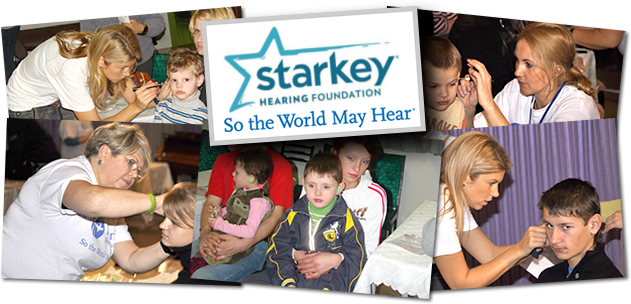
SAN FRANCISCO -- Thousand of the Deaf and Hard of Hearing people around the world concerns with Starkey Hearing Foundation issues over exploitation from celebrates and NFL players who does not knowledge in Deaf Culture nor Sign Language, but just "Hears" which a lead under fire in the Deaf community. Here's the story covers about the Starkey Hearing Foundation's exploitation.
The Daily Moth is the most popular Deaf News in the United States, sharing the extremely important message to the Deaf and Hard of Hearing community about the Starkey Hearing Foundation issues.
California Association of the Deaf's concerns with Starkey Hearing Foundation - During a pre-Super Bowl 50 event hosted by Starkey Hearing Foundation, over seventy people received free hearing aids. While it was hailed by the media as a good deed, parents of Deaf children felt it was exploitation. In this interview, Alex discusses why they felt that way and how Starkey could better frame Deaf people.
To activate this feature, press the "CC" button.
To view California Association of the Deaf's letters. To learn more about ASL and early language acquisition, go to http://www.asl4deafkids.org. Warning: California Association of the Deaf's website may be hacked, claimed by Google. The Deaf community believe it comes from the Starkey Hearing Foundation. What a shame.
There's more about the Starkey Hearing Foundation issues from the United Kingdom "Deaf Culture and the Starkey Hearing Foundation."
To activate this feature, press the "CC" button.
A Deaf vlogger Genki Steph from the United Kingdom sharing the video in British Sign Language discussion topic regarding the Starkey Hearing Foundation and the open letter sent by Stefanie Ellis-Gonzales.
Nice to see the patriachy alive and thriving! Open letter from the United Kingdom: Letter Here.
Related Post: #Starkey Hearing Foundation
VIDEO: Listen Up - Canadian Deaf Sports Association - Exclusive Interviews.

TORONTO -- Video produced for the Canadian Deaf Sports Association featuring athletes, board members and interviews in American Sign Language on Vimeo. Sorry no closed captioning - typically for Deaf Canadians.
Follow Canadian Deaf Sports Association:
Facebook - https://facebook.com/assc.cdsa
Twitter - https://twitter.com/assc_cdsa
Instagram - http://instagram.com/assc_cdsa
Official site - http://assc-cdsa.com
Related Post: #Deaf Canadians
TORONTO -- Video produced for the Canadian Deaf Sports Association featuring athletes, board members and interviews in American Sign Language on Vimeo. Sorry no closed captioning - typically for Deaf Canadians.
Follow Canadian Deaf Sports Association:
Facebook - https://facebook.com/assc.cdsa
Twitter - https://twitter.com/assc_cdsa
Instagram - http://instagram.com/assc_cdsa
Official site - http://assc-cdsa.com
Related Post: #Deaf Canadians
VIDEO: Deaf News - New Mexico School for the Deaf and Deaf community opposes HM 21. A big win-win for the community in the state of New Mexico.
Today the New Mexico School for the Deaf (NMSD) and Deaf community came together to oppose HM 21, a controversial proposal to change the campus to a four-year college program. The motion was withdrew. NMSD Alumni Mark Ramirez fills us in what happened. Here's video in American Sign Language.
To view HM 21: http://bit.ly/1Sedgy0.
Transcript -- Hello, I’m at the Roundhouse, it’s an government building in Santa Fe, New Mexico.
There was just a proposal and a discussion. Check out the people here. See the NMSD community. Teachers, staff, students, and alumni came in big numbers to be supportive. Family, friends, and parents also came. It’s very inspiring. There’s more people around the corner.
What happened? One representative proposed HM 21, and in the language, it proposed NMSD be changed to a four-year college program, to offer more collegiate options other than Gallaudet.
Naturally, this change would negatively impact NMSD’s K-12 program, early intervention, outreach, and other services. Those services reach a multitude of students and people.
After the representative proposed it to the committee, the committee asked who was opposed to it. Many parents, student, alumni, students, staff, and faculty shared touching stories of their experiences and the importance of Deaf community, culture, and language - and the outreach services.
After this touching display, the committee asked who was in favor of HM 21. Nobody showed support for it. Some was neutral. In the end, the committee, including the representatives and the chair - discussed amongst themselves and asked HM 21 to be withdrawn. They said they might re-evaluate this later. They told the representative to work with the NMSD/Deaf community, to not work without them. This was a big win for us.
The final result: the representative withdrew HM 21. It’s over. But, we’re looking at the possibility that it might happen again in the future. We will stay vigilant. -- with Mark Ramirez. Source.
Read the comments on Facebook - NMSD Deaf Community Opposes HM 21
Today the New Mexico School for the Deaf (NMSD) and Deaf community came together to oppose HM 21, a controversial proposal to change the campus to a four-year college program. The motion was withdrew. NMSD Alumni Mark Ramirez fills us in what happened. Here's video in American Sign Language.
To view HM 21: http://bit.ly/1Sedgy0.
Transcript -- Hello, I’m at the Roundhouse, it’s an government building in Santa Fe, New Mexico.
There was just a proposal and a discussion. Check out the people here. See the NMSD community. Teachers, staff, students, and alumni came in big numbers to be supportive. Family, friends, and parents also came. It’s very inspiring. There’s more people around the corner.
What happened? One representative proposed HM 21, and in the language, it proposed NMSD be changed to a four-year college program, to offer more collegiate options other than Gallaudet.
Naturally, this change would negatively impact NMSD’s K-12 program, early intervention, outreach, and other services. Those services reach a multitude of students and people.
After the representative proposed it to the committee, the committee asked who was opposed to it. Many parents, student, alumni, students, staff, and faculty shared touching stories of their experiences and the importance of Deaf community, culture, and language - and the outreach services.
After this touching display, the committee asked who was in favor of HM 21. Nobody showed support for it. Some was neutral. In the end, the committee, including the representatives and the chair - discussed amongst themselves and asked HM 21 to be withdrawn. They said they might re-evaluate this later. They told the representative to work with the NMSD/Deaf community, to not work without them. This was a big win for us.
The final result: the representative withdrew HM 21. It’s over. But, we’re looking at the possibility that it might happen again in the future. We will stay vigilant. -- with Mark Ramirez. Source.
Read the comments on Facebook - NMSD Deaf Community Opposes HM 21
VIDEO [CC] - Hearing vs Deaf - Pros and cons of being Deaf.
Deaf feminist Mhairi Brown from Scotland sharing the video to educate Hearing people, not only the Deaf and Hard of Hearing. Therefore, this is complete misplacement of the small 'd' again to suggest it is inclusive as well. Overall a pro Deaf create an inspiring thoughts within both of awareness and culture. Hearing versus Deaf - What an excellent campaign with positive for the community!
Subscribe - https://youtube.com/channel/lifeanddeaf
Facebook - https://facebook.com/mhairi.tucker
Tumblr - http://lifeanddeaf.tumblr.com
Twitter - https://twitter.com/lifeanddeafpost
Deaf feminist Mhairi Brown from Scotland sharing the video to educate Hearing people, not only the Deaf and Hard of Hearing. Therefore, this is complete misplacement of the small 'd' again to suggest it is inclusive as well. Overall a pro Deaf create an inspiring thoughts within both of awareness and culture. Hearing versus Deaf - What an excellent campaign with positive for the community!
To activate this feature, press the "CC" button.
Follow Life and Deaf:Subscribe - https://youtube.com/channel/lifeanddeaf
Facebook - https://facebook.com/mhairi.tucker
Tumblr - http://lifeanddeaf.tumblr.com
Twitter - https://twitter.com/lifeanddeafpost
Deaf News: Deaf Canadian activist, Landon Krentz on being Deaf: This machine is a human - Self-portrait to raise awareness about a life with CI.
 Landon Krentz is a Vancouver-based arts and events management professional and Deaf-queer individual. He has created a series of social media self-portraits to raise awareness of issue that Deaf people face. This is the second self-portrait in his series.
Are we programmed to behave robotically in social environments?
The cochlear implant (or CI) received its approval by the U.S. Food and Drug Administration in 1990 and it has been controversial for over two decades. This machine had a significant impact on Deaf culture due to the perception of hearing people trying to force it on the community. The greater the force, the more some Deaf community members want to flip a table. For them, the CI is nothing but a computer inside a human body.
In this image, this person is the embodiment of a betrayal of the Deaf world, though Deaf culture remains a part of him.
His experience of Deafness is like a porcupine: when there are social dangers, a quill pricks him for every awkward encounter.
Every day, he is reminded of his interaction with Audisms and ensures that they’re comfortable with him, even though a large percentage of the hearing world will avoid Deaf people due to communication barriers.
He is often caught “checking out” of a conversation and, like a machine, nodding with a pseudo smile.
This bionic human experiences stigma and judgment from both Deaf people and the hearing world because he belongs to neither.
Though his Deaf identity is invisible, he has a choice: to hide or to reveal his beautiful self.
The CI may be a machine and technology will never be perfect. The gap between both worlds the Deaf and hearing worlds are great. It is up to you to decide to proceed with an open mind towards acceptance of all auditory binaries and spectrums. Source
Follow Landon Krentz:
Instagram - https://instagram.com/landon_krentz
Facebook - https://facebook.com/landonkrentz
Twitter - https://twitter.com/landon_krentz
Related Post:
@Deaf Canadians
@Cochlear Implant
 Landon Krentz is a Vancouver-based arts and events management professional and Deaf-queer individual. He has created a series of social media self-portraits to raise awareness of issue that Deaf people face. This is the second self-portrait in his series.
Are we programmed to behave robotically in social environments?
The cochlear implant (or CI) received its approval by the U.S. Food and Drug Administration in 1990 and it has been controversial for over two decades. This machine had a significant impact on Deaf culture due to the perception of hearing people trying to force it on the community. The greater the force, the more some Deaf community members want to flip a table. For them, the CI is nothing but a computer inside a human body.
In this image, this person is the embodiment of a betrayal of the Deaf world, though Deaf culture remains a part of him.
His experience of Deafness is like a porcupine: when there are social dangers, a quill pricks him for every awkward encounter.
Every day, he is reminded of his interaction with Audisms and ensures that they’re comfortable with him, even though a large percentage of the hearing world will avoid Deaf people due to communication barriers.
He is often caught “checking out” of a conversation and, like a machine, nodding with a pseudo smile.
This bionic human experiences stigma and judgment from both Deaf people and the hearing world because he belongs to neither.
Though his Deaf identity is invisible, he has a choice: to hide or to reveal his beautiful self.
The CI may be a machine and technology will never be perfect. The gap between both worlds the Deaf and hearing worlds are great. It is up to you to decide to proceed with an open mind towards acceptance of all auditory binaries and spectrums. Source
Follow Landon Krentz:
Instagram - https://instagram.com/landon_krentz
Facebook - https://facebook.com/landonkrentz
Twitter - https://twitter.com/landon_krentz
Related Post:
@Deaf Canadians
@Cochlear Implant
What is Deaf Gain!? We explain it by using closed captioning as an example.
DEAF Inc. Introduces a new video series - DeafThat shares educational video for the community about Deaf Gain - closed captioning...
Sources:
- Bauman, D-B. & Murray, J.J. (2014). Deaf Gain: Raising the Stakes for Human Diversity (eds.). University of Minnesota Press.
- Griffin, E. (2015). Who Uses Closed Captions? Not Just The Deaf Or Hard Of Hearing. Reaf the full article: Who Uses Closed Captions Not Just The Deaf.
Subscribe DeafThat! Channel - https://youtube.com/deafthat/channel
Related Deaf Gain:
Not Hearing Loss, Deaf Gain
Deaf Gain - Transnationalism
Deaf Awareness 'Deaf Gain' Short Film
Deaf Gain: Visual Manual Education
DeafThat - What Is Deaf Gain? Closed Captions
DEAF Inc. Introduces a new video series - DeafThat shares educational video for the community about Deaf Gain - closed captioning...
Sources:
- Bauman, D-B. & Murray, J.J. (2014). Deaf Gain: Raising the Stakes for Human Diversity (eds.). University of Minnesota Press.
- Griffin, E. (2015). Who Uses Closed Captions? Not Just The Deaf Or Hard Of Hearing. Reaf the full article: Who Uses Closed Captions Not Just The Deaf.
Subscribe DeafThat! Channel - https://youtube.com/deafthat/channel
Related Deaf Gain:
Not Hearing Loss, Deaf Gain
Deaf Gain - Transnationalism
Deaf Awareness 'Deaf Gain' Short Film
Deaf Gain: Visual Manual Education
DeafThat - What Is Deaf Gain? Closed Captions


